 by Vinod Chandrashekhar Dixit
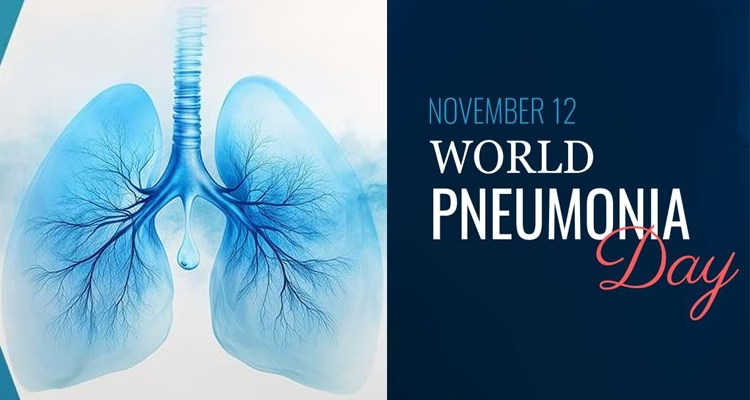
November 12 is observed every year as World Pneumonia Day — a global call to unite people, organizations, and governments in the fight against one of the world’s deadliest yet most preventable diseases. The day aims to raise awareness about pneumonia, which remains a leading cause of death worldwide, particularly among children.
This year’s theme, “Every Breath Counts: Stop Pneumonia in Its Tracks,” underscores the urgent need for collective action to prevent and treat the disease effectively.
A Global Health Challenge
Pneumonia is an infection that inflames the air sacs in the lungs and can be caused by a variety of infectious agents — bacteria, viruses, or fungi. Despite being one of the most solvable problems in global health, pneumonia continues to claim a child’s life every 20 seconds.
Globally, pneumonia takes over 2.5 million lives each year, including more than 700,000 children under the age of five. It is the leading infectious killer of young children, responsible for about 15% of all deaths in this age group. The disease’s devastating toll highlights the urgent need for coordinated action to prevent, treat, and protect vulnerable populations — especially in Sub-Saharan Africa and South Asia, where the burden is highest.
India’s Battle Against Pneumonia
India alone accounts for nearly one-fifth of global pneumonia deaths among children under five. Factors such as malnutrition, indoor air pollution, and limited access to healthcare exacerbate the crisis.
To address these challenges, several initiatives have been launched. The Intensified Mission Indradhanush promotes universal immunization, while the Ujjwala Yojana works to provide clean cooking fuel, reducing indoor air pollution. Global organizations such as WHO, UNICEF, and the Every Breath Counts Coalition continue to play key roles in reducing pneumonia-related deaths through awareness, vaccination drives, and healthcare access.
Prevention is the Strongest Shield
Preventing pneumonia is essential to breaking the vicious cycle of ill health and poverty. Vaccines not only protect individual children but also reduce the circulation of disease in the community.
Effective preventive measures include:
-
Pneumococcal conjugate vaccine (PCV)
-
Haemophilus influenzae type b (Hib) vaccine
-
Influenza and measles vaccines
-
Good nutrition and exclusive breastfeeding
-
Hygiene practices such as handwashing and mask-wearing
When pneumonia does occur, timely diagnosis, antibiotics, and oxygen therapy can save lives.
Tackling Environmental and Nutritional Factors
The World Health Organization’s new guidelines on indoor air quality emphasize reducing harmful household pollutants and identifying unsafe fuels for domestic use. WHO has also urged the global community to minimize children’s exposure to toxic smoke from cooking fumes and promote breastfeeding, especially during the critical months after birth.
A Call to Action
To truly combat pneumonia, it is vital to strengthen political and societal will, increase motivation, and take concrete steps to reduce pneumonia and diarrheal deaths. Expanding access to Hib and PCV vaccines is a crucial step in protecting every child.
An investment in pneumonia prevention is an investment in India’s future — and in social justice. Clean environments, proper nutrition, exclusive breastfeeding, and timely immunization can dramatically lower child mortality rates.
Let us unite to combat pneumonia and ensure that every breath counts.