
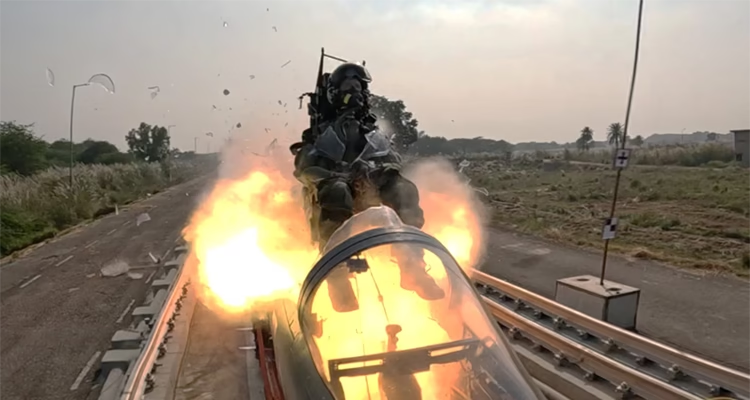
DRDO Validates Indigenous Fighter Ejection System at 800 km/h
Chandigarh/New Delhi: In a landmark step for India’s aviation safety technology, the Defence Research and Development Organisation (DRDO) has successfully completed a high-speed rocket-sled test of a fighter aircraft escape system at the TBRL test facility in Chandigarh. The trial — simulating a real aircraft emergency — confirmed flawless canopy separation, precise ejection timing and safe aircrew recovery at high velocity.
Breakthrough In Aircraft Safety Testing!
DRDO has successfully conducted a high speed rocket sled test of a fighter aircraft escape system at a precisely controlled 800 km/h. The test validated canopy severance, ejection sequencing, and full aircrew recovery at the RTRS facility… pic.twitter.com/8WKYkVkU3P
— MyGovIndia (@mygovindia) December 2, 2025
With this success, India joins a small group of nations capable of conducting such dynamic ejection-system tests in-house, marking a major stride towards defence self-reliance.
The escape-system test used the fore-body of an aircraft mounted on dual rocket sleds, accelerated through sequential rocket firings to replicate intense aerodynamic conditions. An instrumented dummy stood in for the pilot, collecting detailed biomechanical data, while the entire ejection sequence was captured using onboard sensors and ground-based imaging.
.@DRDO_India conducts a successful high-speed rocket-sled test of fighter aircraft escape system
The test at Rail Track Rocket Sled facility of the Terminal Ballistics Research Laboratory, Chandigarh, validated canopy severance, ejection sequencing and complete aircrew-recovery… pic.twitter.com/kRrlZmIit5
— PIB India (@PIB_India) December 2, 2025
Defence Minister Rajnath Singh lauded the achievement, congratulating DRDO, the Indian Air Force, ADA, HAL and industry partners, calling the test “a significant milestone in India’s indigenous defence capability.”
The success of this trial is expected to boost development of escape systems for India’s current and future fighter platforms — enhancing pilot safety while reducing dependence on foreign technology.