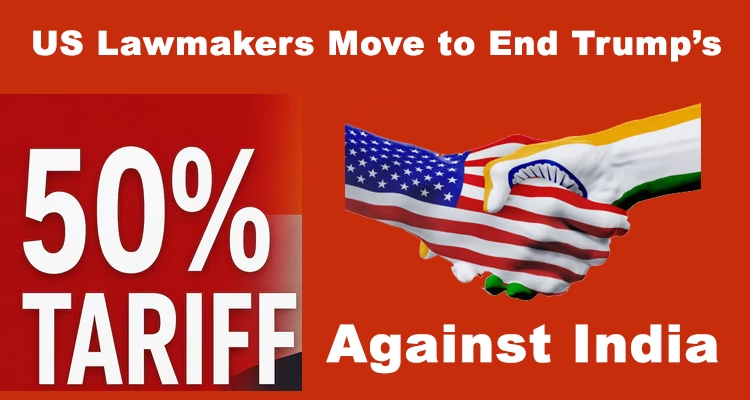
Washington: A group of US lawmakers has stepped up efforts to dismantle former President Donald Trump’s hardline trade measures against India, moving a House resolution to end the emergency order that enabled import duties of up to 50 per cent.
Introduced by Representatives Deborah Ross, Marc Veasey and Raja Krishnamoorthi, the resolution seeks to cancel the legal cover for the tariffs, which the lawmakers say have inflated prices, hurt American workers and strained a key US strategic partnership.
US lawmakers move resolution to end 50% tariffs on India
Even if the tariffs are lifted, India’s strategic autonomy and decision-making will remain unchanged: @live_pathikrit tells @aakaaanksha pic.twitter.com/cgzbK5LS7t
— TIMES NOW (@TimesNow) December 13, 2025
The move specifically targets the additional 25 per cent “secondary” duties slapped on Indian goods on August 27, 2025, which—on top of earlier levies—pushed total tariffs on some products to nearly 50 per cent under the International Emergency Economic Powers Act.
Lawmakers backing the resolution argue the policy has backfired, functioning more like a consumer tax while disrupting supply chains and investment flows. They say rolling back the duties would ease cost pressures at home and help stabilise economic ties with New Delhi.
Ross highlighted India’s deep economic footprint in states like North Carolina, where Indian firms have invested over $1 billion and created thousands of jobs, while US manufacturers depend heavily on exports to India.
US lawmakers Deborah Ross, Marc Veasey, and Raja Krishnamoorthi introduced a resolution to terminate President Donald Trump’s national emergency authorizing tariffs of up to 50% on imports from India.#Trump #Tariff #India pic.twitter.com/JcHdnCqQPP
— Geo Frontline (@geofrontlinetv) December 13, 2025
Veasey said the tariffs have added to the cost-of-living burden for ordinary Americans, while Krishnamoorthi warned of wider market distortions and strategic fallout if the policy continues.
The House initiative follows a parallel bipartisan effort in the Senate to rein in the use of emergency powers for trade actions and undo similar Trump-era tariffs on Brazil.
The dispute dates back to August, when the Trump administration imposed two successive 25 per cent tariff hikes on Indian imports, citing India’s continued purchase of Russian oil. Critics say the approach has done little to advance US interests while complicating relations with one of Washington’s most important partners.
With the new resolution, Congress is signalling a renewed push to reclaim authority over trade policy—and reset US–India economic engagement.