
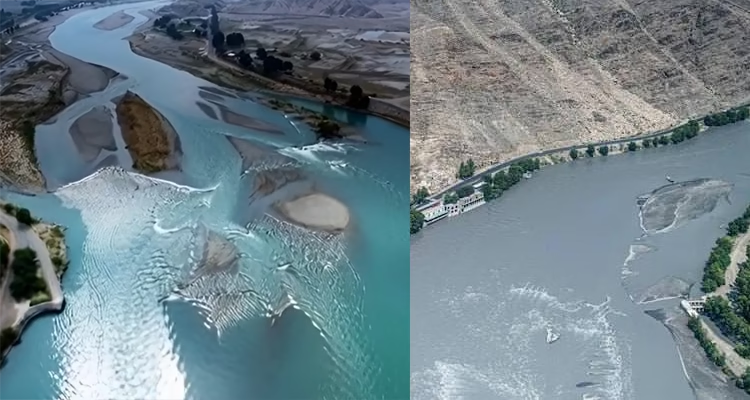
Taliban’s Kunar Dam Plan: A New Water Shock for Pakistan
Pakistan’s water anxiety is deepening as Afghanistan’s Taliban administration moves closer to building a major dam on the Kunar River, opening a new hydro-political front in an already tense neighbourhood.
Afghan authorities have cleared plans to divert Kunar waters toward Nangarhar province, aiming to irrigate arid land and boost agriculture. Kabul maintains that, as an upper riparian state, it has full sovereign rights to utilise its rivers for national development.
For Pakistan, the fallout could be severe. The Kunar River flows into the Kabul River and ultimately feeds the Indus basin, sustaining irrigation, drinking water and hydropower in Chitral and large parts of Khyber Pakhtunkhwa. Water experts warn that large-scale diversion upstream could sharply reduce flows downstream, triggering shortages of electricity and potable water and hitting agriculture hard.
Big news for Afghanistan🚨
In a major move, the Taliban are diverting a portion of the Kunar River’s water inside the country toward the Darunta Dam. This step is expected to have a significant impact on agriculture in Afghanistan. pic.twitter.com/zRLDNTTWzM
— Inside Afghanistan (@A_Observer313) December 16, 2025
The timing is particularly sensitive. Islamabad is already locked in disputes over regional water sharing, while ties with Kabul remain strained over border management, security concerns and the Durand Line. The emerging water dispute threatens to further sour relations between the two neighbours.
Analysts point out that Pakistan’s options are limited. There is no formal water-sharing treaty with Afghanistan, and Islamabad lacks both diplomatic leverage and strategic pressure points over the Taliban regime. Any disruption in river flows, they caution, could quickly snowball into economic stress and political unrest in Pakistan’s northwest.
As Afghanistan pushes ahead with dam-driven development and Pakistan braces for downstream impact, regional observers warn that rivers are fast becoming weapons of geopolitics, with water security shaping the next phase of South Asian tensions.