
India, Nigeria Among Worst Affected as Global Heat (extreme) Crisis Deepens
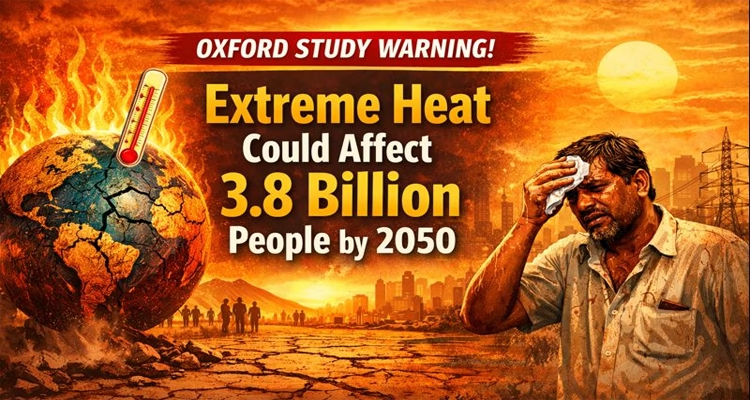
News Desk: A new study by the University of Oxford, published in the journal Nature Sustainability, has sounded a global climate alarm: nearly 3.8 billion people — close to half of humanity — could be living under extreme heat conditions by 2050 if global temperatures rise by 2°C above pre-industrial levels.
The researchers warn that the danger will arrive much earlier than expected, with major impacts unfolding as the world crosses the 1.5°C warming limit set under the Paris Climate Agreement.
Heat Exposure Set to Double
The study reveals that in 2010, around 23% of the global population was exposed to extreme heat. That number is projected to surge to 41% in the coming decades as climate change accelerates.
What is most concerning, the authors say, is that most of the strain on cooling systems, health services and energy demand will occur before the 1.5°C threshold is crossed, leaving little time for governments to prepare.
India, Nigeria Among Worst Affected
The research identifies India and Nigeria as two of the largest hotspots of human exposure, simply because of their massive populations combined with rapidly rising temperatures.
Other countries expected to see the highest number of people impacted include:
-
Indonesia
-
Bangladesh
-
Pakistan
-
Philippines
Meanwhile, the steepest increases in dangerous heat are projected in countries such as the Central African Republic, South Sudan, Laos, and Brazil, where climate vulnerability and limited infrastructure make adaptation difficult.
Cold Countries Will Also Burn
Surprisingly, the study finds that nations known for colder climates will experience the sharpest relative rise in hot days.
Compared to the 2006–2016 climate period:
-
Austria and Canada could see hot days double
-
UK, Sweden, Finland may face a 150% rise
-
Norway could see a 200% increase
-
Ireland may experience a 230% surge
Many homes, transport systems and power grids in these countries were never designed for prolonged heat, making them highly vulnerable.
Health, Energy and Economic Shock
The authors warn that extreme heat will:
-
Strain public health systems
-
Disrupt education and productivity
-
Increase climate-driven migration
-
Push global energy demand for cooling to record levels
While heating demand may fall in colder countries, the global rise in air-conditioning use is expected to drive emissions even higher, unless clean energy solutions expand rapidly.
Urgent Call for Action
Lead author Dr Jesus Lizana, Associate Professor of Engineering Science at Oxford, said:
“Most of the critical changes in heating and cooling demand happen before the world reaches 1.5°C. This means adaptation must begin much earlier than policymakers expect.”
Dr Radhika Khosla, head of the Oxford Martin Future of Cooling Programme, called the findings a wake-up call, warning that surpassing 1.5°C will have unprecedented impacts on health, agriculture, education and migration.
New Global Heat Dataset
The study also introduces an open-source global climate dataset, featuring 30 high-resolution maps that track heating and cooling needs worldwide. Researchers say the data can help governments design resilient buildings, energy systems, and climate policies before extreme heat becomes unmanageable.