
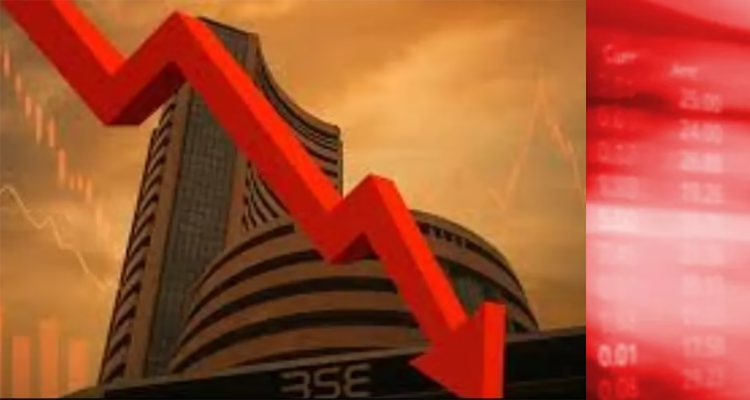
News Desk: Indian equity markets witnessed a sharp sell-off following the Union Budget 2026, as investors reacted negatively to higher transaction taxes and the absence of strong market-friendly incentives. The benchmark indices — Sensex and Nifty — fell steeply during the special Budget trading session, wiping out massive investor wealth.
According to market sources, investors lost nearly ₹16 lakh crore in market value within hours of the Budget announcements.
The sharp decline was triggered primarily by the government’s decision to raise the Securities Transaction Tax (STT) on derivatives trading, a move that unsettled traders and institutional investors alike.
Key Reasons Behind the Market Fall
1. STT Hike Shocks Derivatives Market
The Budget proposed a steep increase in Securities Transaction Tax on Futures and Options trades:
-
Futures: from 0.02% to 0.05%
-
Options: up to 0.15%
This sudden rise in trading costs immediately hit market sentiment, particularly among high-volume traders and brokerage firms. The derivatives segment, which accounts for a large share of daily trading volumes, saw heavy selling pressure.
2. Higher Costs Trigger Panic Selling
With trading expenses set to rise, investors rushed to close positions. This led to widespread selling across large-cap, mid-cap and small-cap stocks, intensifying volatility.
Stocks of brokerage houses, financial services firms and market intermediaries were among the worst hit.
3. Lack of Fresh Market Boost
Market participants were expecting policy support for equities, including tax relief or measures to attract foreign investments. The absence of such steps disappointed investors and weakened confidence.
4. Profit Booking After a Strong Rally
Equities had rallied strongly in the weeks leading up to the Budget. When expectations were not met, traders chose to book profits, accelerating the decline.
5. Technical Triggers and Market Psychology
Once key support levels were breached, automated and technical selling further deepened the fall. Sharp intraday swings reflected fear-driven trading rather than long-term fundamentals.
Market Impact
During intraday trade:
-
Sensex plunged over 1,000 points
-
Nifty slipped sharply below key levels
-
Broader markets also fell, with mid-cap and small-cap stocks under pressure
According to market sources, investors lost ₹16 lakh crore in market capitalisation during the session.
Analysts’ View
Experts believe the sell-off was a knee-jerk reaction to higher trading costs. While the Budget focuses on long-term growth through infrastructure, healthcare and manufacturing, traders responded negatively to short-term tax burdens.
They expect markets to stabilise once the initial shock settles and clarity emerges on policy execution.
Conclusion
The Sensex crash after Budget 2026 highlights how sensitive markets are to tax and regulatory changes. While the broader economic vision remains intact, short-term sentiment was shaken by measures that directly impacted trading activity.