News Desk: A majority of Americans remain uneasy about the state of the economy, with rising costs of basic necessities — particularly healthcare, food and housing — emerging as their primary concerns, according to a new study by the Pew Research Center.
The survey, conducted among thousands of U.S. adults in late January, shows public sentiment toward the national economy continues to be largely pessimistic. Only a minority of respondents described current economic conditions as good, while a clear majority rated them as fair or poor, reflecting persistent dissatisfaction despite broader policy and market developments.
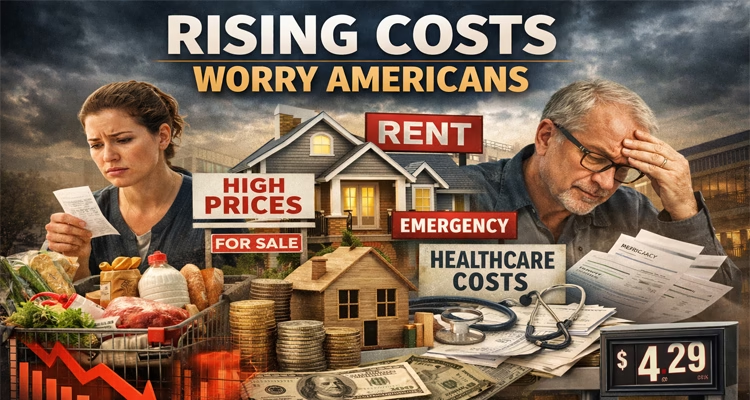
Within this climate of uncertainty, everyday expenses dominate household anxieties. About seven in ten respondents said they were highly concerned about the cost of healthcare. Roughly two-thirds expressed similar worries about the price of food and consumer goods, while a comparable share cited housing costs as a major source of stress. These issues ranked well above concerns related to financial markets or employment indicators.
Additional household expenses also drew attention, though at lower levels. About half of those surveyed reported concern over electricity prices, and roughly one-third were worried about gasoline costs. By comparison, fewer respondents identified job availability or stock market performance as pressing issues, underscoring how day-to-day living costs weigh more heavily on public perception of economic well-being.
Looking ahead, Americans remain divided about the economic trajectory over the next year. A significant share expects conditions to worsen, while smaller but comparable proportions anticipate improvement or foresee little change, reflecting uncertainty about future stability.
The study also highlighted sharp political divisions in economic perceptions. Supporters of the governing leadership were more likely to express optimism about current conditions and future prospects, while critics voiced stronger concern over rising costs and policy impacts. Public opinion on the effect of government economic policies was similarly split, with more respondents believing the policies had worsened conditions than improved them.
Overall, the findings point to a consistent pattern: Americans’ economic outlook is shaped less by macroeconomic indicators and more by the affordability of essential goods and services. As healthcare, housing and food costs continue to strain household budgets, cost-of-living pressures remain central to public sentiment and are likely to stay prominent in national policy and political debates.