 by Dr. Vinod Chandrashekhar Dixit
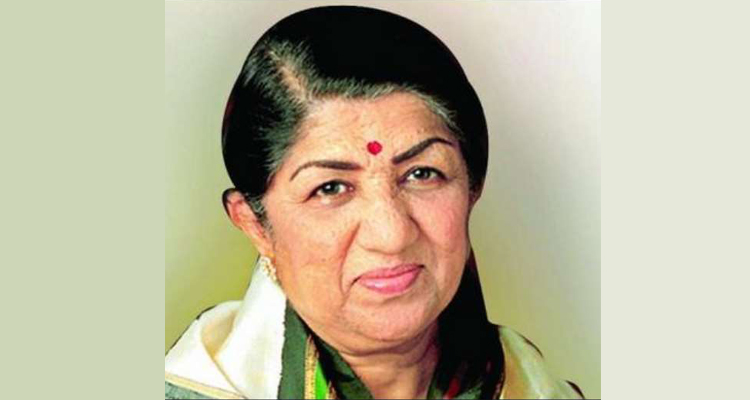
Lata Mangeshkar’s death anniversary on February 6, 2026, marks her fourth death anniversary. She passed away on February 6, 2022, at the age of 92 due to multiple organ dysfunction syndrome. The iconic Indian singer, fondly known as the “Nightingale of India,” charmed millions across the country and the world with her melodious voice. Her legacy continues to resonate, and she will forever rule the hearts of music lovers. Her passing marked the end of an era in Indian music, yet the magic of her voice lives on.
Over the course of her illustrious career, she recorded around 50,000 songs as a playback singer in films across 14 Indian languages. Her extraordinary journey stands as an iconic success story and an enduring inspiration for aspiring as well as established singers. Lata was named “Hema” at birth, but her parents later renamed her Lata after the female character Latika from one of her father’s plays, Bhaaw Bandhan.
Affectionately called “Lata Didi” in the Bollywood music fraternity, she was born into a Marathi-speaking family in Indore to classical singer and theatre actor Pandit Deenanath Mangeshkar and his wife Shevanti, a homemaker. Widely regarded as one of the most recorded voices in history, she received her first major break with the song Dil Mera Toda in the film Majboor (1948). Her first major hit came with Aayega Aanewaala, picturised on Madhubala in Mahal (1949). She later won the Filmfare Award for Best Female Playback Singer for Aaja Re Pardesi from Madhumati (1958).
Lata began learning music from her father at the age of five and later trained under Aman Ali Khan Sahib and Amanat Khan. She sang for more than 500 films and became one of the most admired voices in India. After India’s losses in the 1962 India–China war, her rendition of Ae Mere Watan Ke Logon, written by Kavi Pradeep, moved listeners to tears and remains one of her most powerful patriotic songs. When she performed it on January 27, 1963, it reportedly brought tears to the eyes of then Prime Minister Jawaharlal Nehru.
Her stylistic innovations helped shape the presence of women’s voices in Indian cinema’s public sphere. She symbolized grace, honour, and excellence in playback singing. Among her timeless gems are Lag Jaa Gale, Aap Ki Nazron Ne Samjha, and Mera Saaya Saath Hoga, composed by Madan Mohan. With Shankar–Jaikishan, she delivered classics such as Pyar Hua Ikrar Hua, Yeh Raat Bheegi Bheegi, Main Kya Karoon Ram, and Raja Ki Aayegi Baraat. Ram Laxman composed one of their biggest hits with her voice in Didi Tera Devar Deewana from Hum Aapke Hain Koun. Under S. D. Burman’s guidance, she demonstrated her command over earthy and nuanced tonalities.
Her success stemmed from her pursuit of perfection and unique vocal qualities, enabling her to lend her voice to thousands of songs in Hindi, regional, and foreign languages. She was awarded the Bharat Ratna, India’s highest civilian honour, in 2001, and France conferred upon her the Officer of the Legion of Honour in 2007. Reflecting on her life, she once said:
“From my experience and understanding, I believe money follows name and fame, while recognition calls for a huge amount of sacrifice. To get something, you have to lose something — that’s the rule of life.”
Her influence extended beyond singing. There was no category for Best Playback Singer in the Filmfare Awards until her protest led to its introduction in 1958. She won her first Filmfare Award that year and dominated the category until 1966, voluntarily stepping aside in 1969 to encourage new talent.
Her voice was uniquely suited to soothing, mature, melodramatic, and patriotic compositions. She valued musical integrity above popularity, choosing songs that resonated with her ideals. Lata Mangeshkar became an inspiration to singers and composers alike, earning immense respect across the music industry and among listeners worldwide.
It is reported that she recorded numerous songs with Mohammed Rafi, though the two briefly stopped singing together due to differences. After four years, with the intervention of actress Nargis, they reconciled and performed together again. In one interview, she acknowledged Ghulam Haidar as her true godfather, crediting him for recognizing and nurturing her talent.
Her songs are woven into the fabric of everyday life in India, and her voice remains engraved in collective memory. She inspired countless people through her devotion, discipline, and dedication. Lata Mangeshkar’s legacy endures, and her melodies will continue to be cherished forever.