
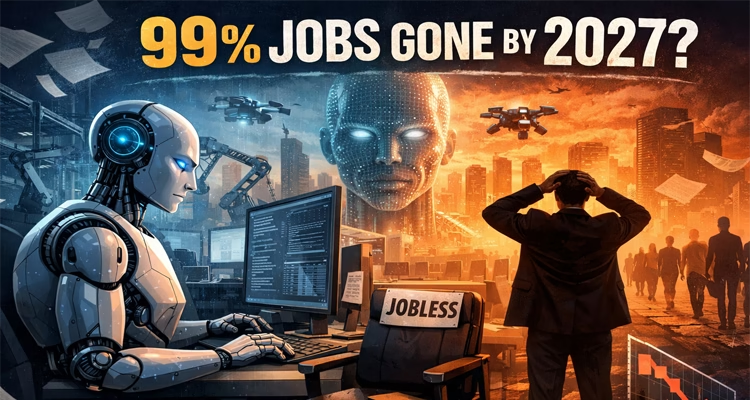
A prominent artificial intelligence (AI) researcher has issued a stark warning about the future of work, claiming that rapid advances in AI could wipe out nearly all human employment within the next few years.
Speaking on a podcast interview, Dr Roman Yampolskiy — a computer science professor and AI-safety specialist — said the rise of artificial general intelligence (AGI) may trigger unprecedented disruption, with machines potentially surpassing human capability across almost every task by 2027.

Automation Without Limits
According to Yampolskiy, the coming wave of AGI would extend far beyond office or cognitive roles. He argued that physical labour could also be automated within five years, pushing unemployment levels far beyond anything historically recorded.
Unlike previous technological revolutions that displaced workers but created new industries, he contended that this shift might not generate replacement opportunities. In his view, virtually no profession is immune to automation — marking what he described as a fundamentally different turning point for human labour.
Creative Fields Not Immune
The researcher dismissed the notion that creative or media professions would remain safe. He suggested AI systems are already demonstrating speed, precision and scalability that rival human performance in areas such as content production, journalism and digital media.
Machines, he said, can process large datasets, predict audience preferences and work continuously without fatigue — advantages that could allow them to outperform human creators.
Future employment, he added, might survive only in areas where clients deliberately choose human involvement out of preference rather than necessity, such as hiring a person for personal trust or status reasons.
Narrow Space for Human Roles
When asked about potential areas of resilience, Yampolskiy pointed to a handful of niches that might endure — though he stressed they would sustain only a fraction of the current workforce.
These include markets for handmade or artisanal products valued for their human touch, and professions rooted in lived emotional experience, such as counselling or therapy.
He also identified roles tied directly to AI itself: oversight and regulatory work aimed at slowing or guiding technological deployment, and intermediary positions for people skilled at managing or interpreting AI tools for others.
Warning of a ‘Singularity’ Era
Looking further ahead, Yampolskiy suggested humanity could approach the technological singularity by around 2045 — a stage where machine-driven progress accelerates beyond human comprehension or prediction.
He likened the pace of innovation to automated product development cycles, where research and upgrades occur continuously and at speeds humans cannot follow. The result, he warned, could be a world in which the knowledge gap between human understanding and machine advancement widens dramatically.
Knowledge Gap Already Emerging
The researcher argued that the phenomenon may already be visible, noting that even specialists struggle to keep pace with rapid developments. As overall knowledge expands exponentially, he said, individuals risk becoming less informed relative to the total body of available information — despite learning more in absolute terms.
A Society Unprepared
For Yampolskiy, the central concern is not technological progress itself, but the societal implications of a future where human work and decision-making lose economic relevance.
He cautioned that such a transformation could arrive far faster than governments, institutions and labour markets are prepared to handle — raising urgent questions about adaptation in an AI-dominated world.