Dr. Vinod Chandrashekhar Dixit
Explore the significance of Ramadan 2026, its fasting traditions, spiritual importance, Tarawih prayers, Laylat al-Qadr, and the joyous Eid al-Fitr celebration.

Ramadan is the ninth and holiest month of the Islamic calendar, marked by 29–30 days of dawn-to-sunset fasting (sawm), daily prayers, and reflection. In 2026, it is observed with communal iftar meals, charity, and special nightly Tarawih prayers, culminating in the joyous Eid al-Fitr celebration. Ramadan brings with it a spirit of unity, with many communities hosting interfaith iftars that promote solidarity across different backgrounds. It is a time for increased prayer, charity, and kindness, aiming to strengthen one’s connection with Allah and cultivate compassion and forgiveness.
The observance of Ramadan is deeply personal and individual. It is a time of sacrifice and renunciation as well as a period of reflection and spiritual growth. Ramadan is the ninth month in the Muslim lunar calendar. Healthy adult Muslims fast during Ramadan from dawn until dusk. This includes abstaining from food, drink, immoral acts, and anger. Other acts of worship—such as prayer, reading the Quran, and charity—are also encouraged during the holy month.
According to Islamic teachings, Ramadan holds great importance because it was during this month that Allah SWT (God) first revealed the Quran (the holy book of Muslims) to Prophet Muhammad (PBUH). Fasting during this month is considered one of the Five Pillars of Islam. There is also a verse in the Quran that prescribes fasting for all Muslims who are mature and healthy enough to observe it for the full day.
Each pillar denotes an obligation for living a good Muslim life. The others include reciting the Muslim profession of faith (Shahada), performing daily prayers (Salat), giving alms to the poor (Zakat), and making a pilgrimage to Mecca (Hajj). Ramadan concludes with the three-day festival of Eid al-Fitr, one of Islam’s major holidays.
It is said: “The month of Ramadan is that in which was revealed the Quran, a guidance for the people and clear proofs of guidance and criterion.” It marks the anniversary of the Book of Guidance, which transformed the illiterate Arabs into one of the most cultured and civilised societies within a remarkably short period in human history.
Muslims continue their regular work, school, and daily responsibilities during Ramadan. However, many also strive to read the entire Quran, offer special prayers, and attend mosques more frequently. Muslims fast as an act of worship, a means to grow closer to God, and a way to develop compassion for those in need.
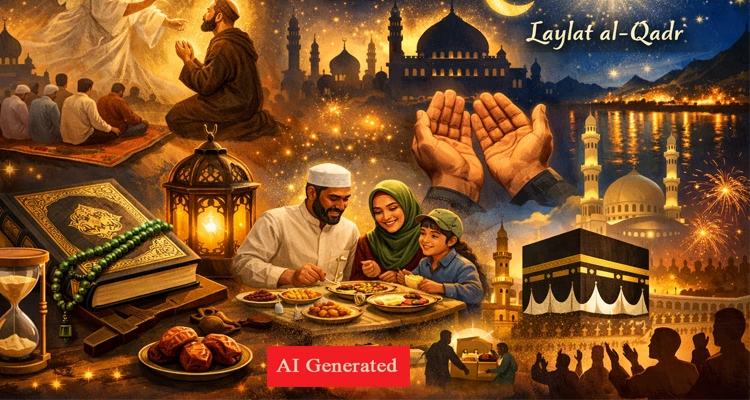
The name Ramadan stems from the Arabic root ar-ramad, meaning scorching heat. Muslims believe that in A.D. 610, the Angel Gabriel appeared to Prophet Muhammad and revealed the Quran to him. This revelation—Laylat al-Qadr, or the “Night of Power”—is believed to have occurred during Ramadan. The Quran addresses nearly every aspect of human life and many branches of knowledge. Teaching others is considered an “ongoing charity,” bringing continuous reward even after a person’s death.
Different cultures observe Ramadan with unique traditions, whether through special foods or extended family iftar gatherings. Islamic values such as generosity inspire many of these customs, including sharing food and inviting guests for iftar.
During Ramadan, Muslims aim to grow spiritually and build a stronger relationship with Allah. They do this by praying and reciting the Quran, making their actions intentional and selfless, and abstaining from gossip, lying, and conflict. The month of Ramadan is also regarded as a time of forgiveness. Allah SWT is believed to be most forgiving during this period, and many Muslims use the holy month to seek forgiveness for sins—intentional or unintentional—committed in the past year.
As Ramadan ends, Muslims worldwide bid farewell to a month of spiritual growth, self-reflection, and community. The lessons of compassion, forgiveness, and self-discipline learned during this sacred period remain with them, inspiring a renewed commitment to faith and values. Though Ramadan concludes, its spirit lives on, guiding Muslims to spread kindness, empathy, and peace throughout the year.