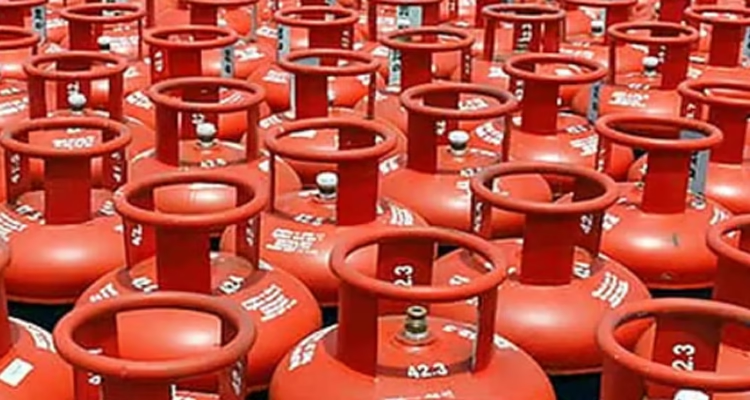
New Delhi: India has recorded a significant 25 percent increase in domestic liquefied petroleum gas (LPG) production following a series of government measures aimed at strengthening supplies for household consumers amid evolving global energy uncertainties.
Speaking at an inter-ministerial briefing in New Delhi on developments in West Asia, Joint Secretary in the Ministry of Petroleum and Natural Gas, Sujata Sharma, said the government issued a directive on March 8, 2026, instructing refineries and petrochemical complexes to maximise LPG production.
❌ Myth: LPG imports disruption means India will face severe shortages
✅ Fact:
Following Government measures, domestic LPG production has increased by about 25% and the entire domestic #LPG production is being directed towards household consumers #EnergySecurity #NaturalGas… pic.twitter.com/79lB0ZthxQ— PIB India (@PIB_India) March 12, 2026
Under the directive, refineries were asked to divert streams of propane, butane, propylene and butenes into the LPG pool. The move has resulted in a sharp rise in domestic LPG output, with the entire additional production now being channelled toward meeting household demand across the country.
Officials said the measure has strengthened India’s energy security and ensured uninterrupted LPG supply for domestic consumers.
Crude Oil Supplies Remain Secure
Addressing concerns over global energy disruptions, Sharma said India’s crude oil supply chain remains stable and diversified. Nearly 70 percent of the country’s crude imports are now sourced from regions outside the Strait of Hormuz, reducing exposure to potential disruptions in the strategically sensitive passage.
She added that the volume of crude oil secured by the government currently exceeds what would normally arrive through the Strait of Hormuz. India presently imports crude oil from around 40 countries, while oil marketing companies have arranged additional cargoes through multiple supply channels.
India’s gas companies have also sourced liquefied natural gas (LNG) from new suppliers, with two LNG cargo shipments currently en route to the country.
Government Monitoring Indians in West Asia
Meanwhile, the Ministry of External Affairs said the government remains in close contact with Indian nationals living and working in Gulf Cooperation Council (GCC) and West Asian countries.
MEA spokesperson Randhir Jaiswal said Indian missions across the region are maintaining regular communication with community members to ensure their safety and welfare.
He also confirmed that two Indian nationals were killed and one person remains missing after merchant vessels came under attack in the region. Several Indians injured in the Gulf are receiving medical treatment, and Indian consulates are coordinating assistance.
Monitoring of Indian Ships in Persian Gulf
Special Secretary in the Ministry of Ports, Shipping and Waterways, Rajesh Kumar Sinha, said authorities are closely monitoring Indian vessels operating in the Persian Gulf.
Currently, 28 Indian-flagged ships carrying 778 Indian seafarers are operating in the region. The government, along with shipping companies and recruitment agencies, is coordinating with Indian embassies and local authorities to ensure their safety and provide medical support where required.
Sinha added that port operations across India remain stable despite global tensions. Ports have been instructed to extend full support to exporters and traders to minimise disruptions and ensure smooth continuation of international trade.