 Dr. Vinod Chandrashekhar Dixit
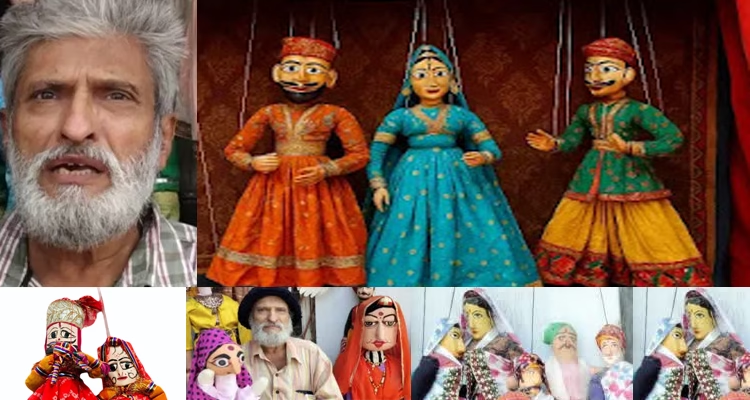
Puppetry, one of India’s most ancient and expressive art forms, is slowly fading into obscurity. Amid this decline stands Ramesh Raval, a 72-year-old puppeteer from Ahmedabad, who has devoted over five decades to mastering the craft. Over the years, he has created more than 2,000 puppets and performed extensively across India and abroad.
Ramesh’s journey into puppetry began when he was introduced to the Darpana Academy, where he discovered that puppets could bring paintings and stories to life. What began as curiosity soon transformed into a lifelong passion.
However, despite his unwavering dedication, Ramesh now faces serious challenges in sustaining this traditional art form. He points to the lack of government support and the overwhelming rise of digital entertainment as major threats. “Television, especially, has dealt us a heavy blow,” he says. His struggle reflects the harsh reality faced by many traditional artists in India, who are increasingly forced to abandon their craft due to financial hardships and declining public interest.
Indian puppetry boasts a rich and diverse heritage, tracing its roots back to the Indus Valley Civilization. Across the country, various regional styles have flourished, each with its own unique identity. Kathputli of Rajasthan uses intricately carved wooden puppets to narrate mythological tales. Tholu Bommalata of Andhra Pradesh features detailed leather puppets that bring epic stories to life through shadow play. Pavakoothu from Kerala uses vibrant puppets to depict episodes from Hindu epics. These forms have traditionally served not only as entertainment but also as powerful mediums of education and moral storytelling.
Coming from a family deeply rooted in puppetry for generations, Ramesh continues to carry forward this legacy, even as financial struggles persist. He urges authorities and society at large to recognize the value of this art. “Officials and policymakers must make puppet shows an integral part of cultural events in villages, towns, and cities,” he emphasizes. He also suggests that private patrons and institutions can play a significant role by including puppet performances in celebrations and public programs.
Puppet shows, he explains, have a strong visual appeal and create a direct connection with audiences. They can be effectively used to promote civic awareness, address socio-economic issues, and communicate national concerns. Schools, in particular, can benefit from incorporating puppetry into their educational activities. “Puppets capture children’s attention and can even influence behavioural change,” Ramesh notes.
To ensure the survival of this art form, there is an urgent need for structured support systems. The government must explore sustainable livelihood options for puppeteers. Introducing puppetry into school curricula, providing financial assistance, and promoting cultural exchange initiatives can significantly contribute to its revival. Encouragingly, institutions like the National Institute of Design have already taken steps in this direction by developing innovative puppetry projects that blend tradition with modern creativity.
Renowned puppeteers such as Dadi Pudumjee and Ramdas Pandhye have also played a crucial role in preserving and promoting Indian puppetry on both national and international platforms. Efforts are now being made to modernize puppetry by incorporating contemporary themes and techniques, making it more appealing to younger audiences.
Ramesh Raval’s story is not just about one artist’s struggle—it is a reflection of the broader challenges confronting India’s traditional art forms. Yet, his enduring passion offers hope. With adequate support, recognition, and collective effort, puppetry can reclaim its rightful place in India’s cultural landscape—continuing to educate, inspire, and entertain generations to come.