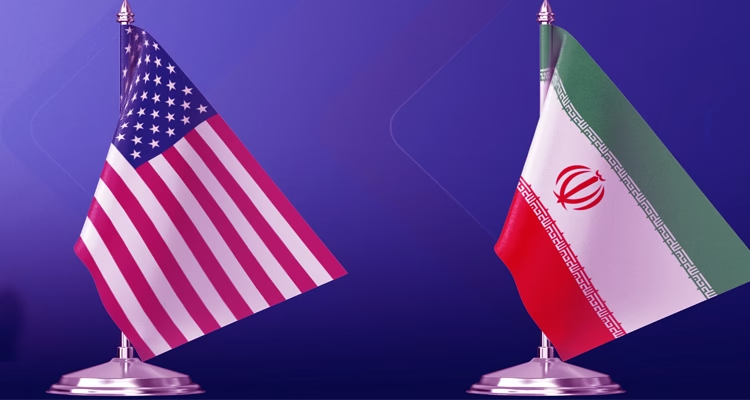
News Desk: In a significant diplomatic development amid escalating tensions in West Asia, mediating countries are reportedly working to facilitate a crucial meeting between the US (United States) and Iran in Islamabad, possibly later this week. The development, first reported by The Times of Israel citing Channel 12, signals renewed efforts to de-escalate a conflict that has entered its fourth week.
High-Level Delegations Expected
According to the report, the proposed US delegation may include key figures such as Jared Kushner, Steve Witkoff, and Vice President JD Vance, indicating Washington’s serious intent to explore a negotiated settlement. On the Iranian side, Parliament Speaker Mohammad Bagher Qalibaf is expected to lead the delegation, reflecting Tehran’s willingness—at least at a political level—to engage.
However, uncertainty continues to cloud the diplomatic track, with Iran officially denying that any direct or indirect talks have taken place so far.
Trump Announces Temporary Halt to Strikes
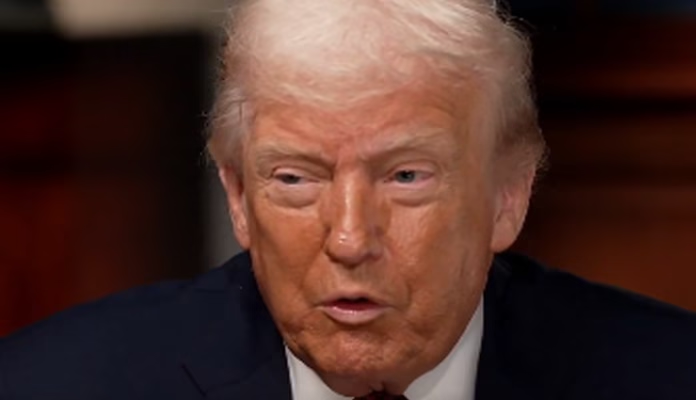
Amid these developments, US President Donald Trump announced a temporary suspension of planned military strikes on Iran’s energy infrastructure. Speaking at an event in Tennessee, Trump revealed that attacks targeting Iranian power plants had been imminent.
“We were planning tomorrow on shooting down some of their power plants, and we’re not going to—we’re going to hold that up,” Trump said, expressing hope for a peaceful resolution.
In a subsequent social media post, Trump confirmed a five-day pause in strikes, claiming it followed “very good and productive conversations” aimed at achieving a “complete and total resolution” of the conflict. Tehran, however, has rejected these claims, insisting that no such discussions have occurred.
War Enters Fourth Week, Tensions Escalate
The conflict began on February 28, when US-Israeli forces launched coordinated strikes on Iranian targets, triggering a sharp escalation across the region. Since then, the crisis has expanded beyond direct confrontations, raising fears of a wider regional war.
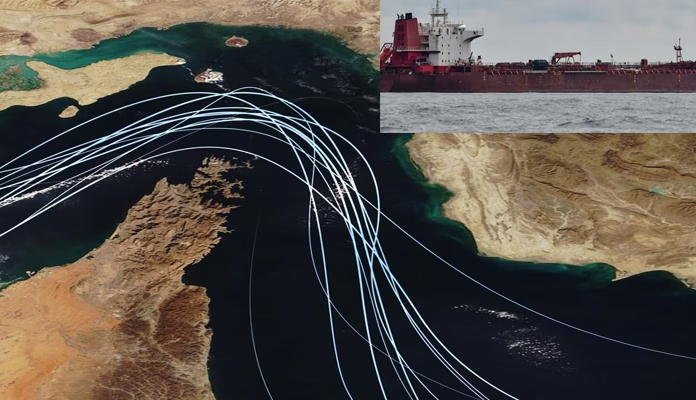
Iran has issued stern warnings, including threats of retaliatory attacks on critical infrastructure in Gulf countries. This comes in response to earlier US threats to target Iran’s electricity grid, particularly in the strategically sensitive Strait of Hormuz region.
Oil Markets React to Rising Uncertainty
Global markets have already begun reacting to the heightened tensions. Oil prices surged sharply on Monday, with Brent crude briefly climbing to $113.44 per barrel before settling around $111. The spike reflects investor anxiety over potential disruptions in one of the world’s most vital energy corridors.
Israel Expands Military Operations
Meanwhile, Israeli military activity has intensified on another front. Israeli forces reportedly struck the Qasmiyeh Bridge in southern Lebanon—a critical infrastructure link. Lebanese President Joseph Aoun described the move as a possible “prelude to a ground invasion,” raising concerns about the conflict spilling further into neighboring territories.
A Narrow Window for Diplomacy
Despite the rising tensions, Washington appears to be testing diplomatic waters. President Trump emphasized that efforts are underway to determine whether a “broader agreement” with Iran is achievable.
“Iran has one more chance at peace,” he said, suggesting that the coming days could prove निर्णisive.
As backchannel efforts intensify and Islamabad potentially becomes the stage for critical negotiations, the world watches closely. Whether this fragile pause leads to meaningful dialogue—or merely delays further escalation—remains uncertain.