Pakistan’s Diplomatic Gamble: Mediating US–Iran Conflict to Avoid Economic Fallout…
As tensions between the United States (US), Israel and Iran escalate, Pakistan has stepped up efforts to position itself as a mediator. The urgency is driven not by diplomatic ambition alone, but by a mix of economic strain, security concerns and strategic calculation.
Energy Shock Driving Urgency
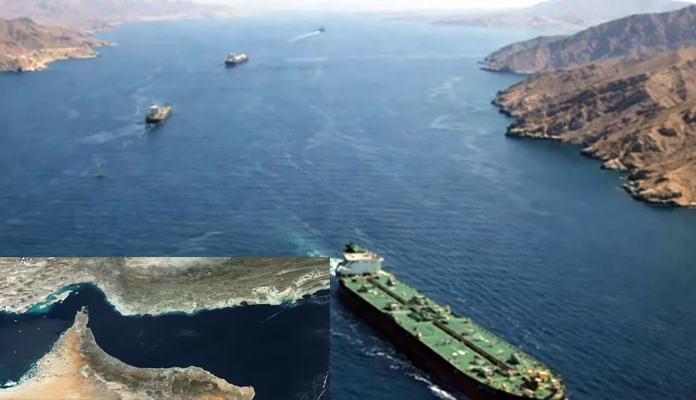
The instability around the Strait of Hormuz—through which a significant share of the world’s oil passes—has disrupted energy flows and pushed global prices upward. For Pakistan, heavily reliant on Gulf oil and LNG imports, the impact has been immediate.
Rising fuel costs have begun to feed into inflation, increasing pressure on households and businesses. With limited energy reserves, the country remains highly exposed to prolonged supply disruptions.
Economic Fragility Exposed
Pakistan’s fragile economic recovery is under renewed stress. With constrained fiscal space and minimal strategic oil reserves, any sustained spike in global crude prices could deepen the crisis.
The government led by Shehbaz Sharif has initiated conservation measures, cutting energy consumption and scaling down non-essential activity to manage dwindling supplies.
Security Risks at the Border
Geography adds another layer of urgency. Sharing a long border with Iran, Pakistan faces the risk of spillover if the conflict widens. Potential refugee flows, border tensions and disruptions to regional trade routes remain key concerns.
Instability along the Afghan frontier further complicates the situation, placing Islamabad at the centre of multiple security pressures.
Balancing Between Rivals
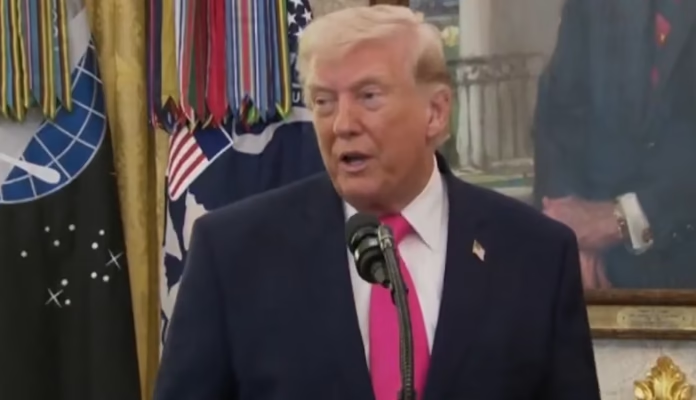
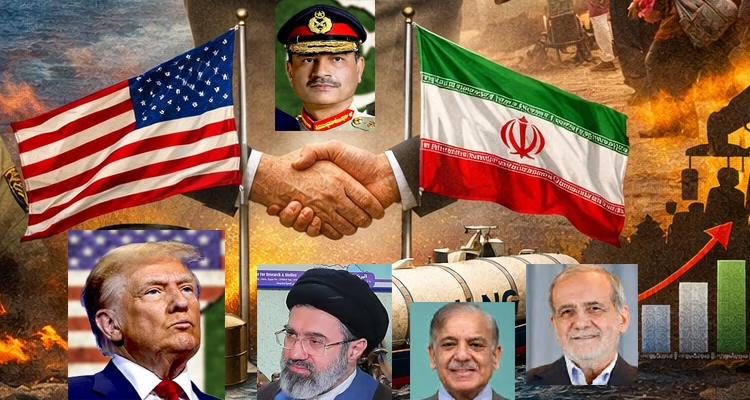
Pakistan’s mediation push is enabled by its ability to maintain working ties with both sides. It continues to engage with the United States under President Donald Trump while keeping diplomatic channels open with Tehran.
Military leadership, particularly Army Chief Asim Munir, is believed to be playing a key role in backchannel outreach, strengthening Islamabad’s credibility as a potential intermediary.
A Strategic Move for Survival
By offering to facilitate dialogue, Pakistan aims to contain economic fallout, prevent regional instability and reinforce its diplomatic relevance. Analysts view the effort as a necessity-driven move—an attempt to shield the country from a crisis it can ill afford.
High Stakes Ahead
With energy markets volatile and geopolitical tensions rising, Pakistan’s diplomatic gamble carries significant risks. Success could boost its global standing, but failure may leave its economy and security environment under severe strain.
In essence, Pakistan’s race to broker peace is about more than diplomacy—it is about protecting its own stability as a distant conflict edges closer to home.