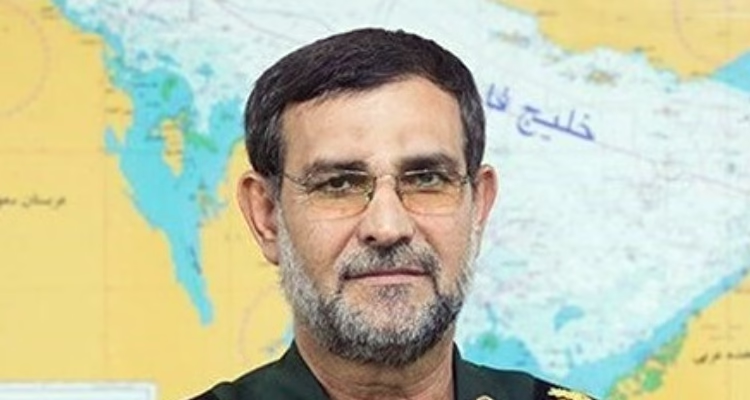
News Desk: In a major escalation amid the ongoing West Asia conflict, Israel has claimed that Alireza Tangsiri, the naval commander of Iran’s Islamic Revolutionary Guard Corps (IRGC), was killed in a strike near Bandar Abbas. Reports in Israeli media, citing official sources, suggest the operation was carried out jointly with the United States.
There has been no immediate confirmation from either Iran or the Israeli military. If verified, the killing would mark one of the most significant blows to Iran’s military leadership since hostilities intensified nearly four weeks ago.
Key Architect of Iran’s Maritime Strategy
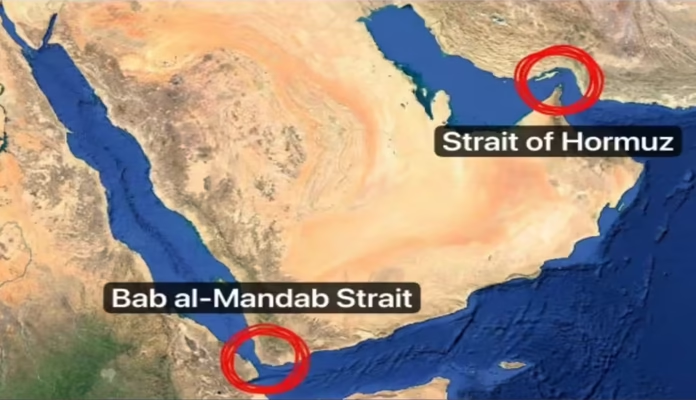
Tangsiri, who had headed the IRGC Navy since 2018, was considered a central figure in Iran’s maritime operations, particularly in the strategically vital Strait of Hormuz. Under his leadership, Iran adopted an assertive posture in the region, leveraging naval power to influence global shipping routes.
Role in Hormuz Disruptions
He was widely seen as instrumental in enforcing Iran’s restrictions in the Strait of Hormuz—a crucial corridor connecting the Persian Gulf to international waters and carrying a substantial share of the world’s oil and gas supplies.
In recent weeks, Iran has reportedly limited passage for vessels linked to US and Israeli interests, while allowing selective movement for others. The resulting disruption has significantly altered maritime traffic patterns.
Shipping data indicates a dramatic decline in vessel movement through the strait, with crossings dropping sharply compared to normal levels. On several days, only a handful of ships were able to pass, underlining the scale of the disruption.
Global Shipping Feels the Strain
The sharp reduction in traffic has placed considerable stress on global energy supply chains. The Strait of Hormuz, which typically sees heavy daily vessel movement, has witnessed an unprecedented slowdown, raising concerns over fuel supply and price volatility.
There are also indications that Iran has explored new mechanisms to regulate maritime passage, including the imposition of transit fees. Some ships are believed to have complied using alternative currencies, reflecting a possible shift in regional trade dynamics.
Mounting Leadership Losses
The reported strike on Tangsiri comes amid a broader pattern of targeted attacks on senior Iranian figures since the conflict escalated in late February. Several high-ranking military officials and influential political personalities have been killed in operations attributed to US-Israeli coordination.
Despite these setbacks, Iran’s governance structure remains intact, backed by a combination of clerical authority, elected institutions, and the IRGC’s extensive military network.
Earlier, the reported death of senior political figure Ali Larijani had already dealt a significant blow to Iran’s leadership, given his long-standing influence within the country’s power structure.
Conflict Intensifies
If confirmed, Tangsiri’s killing could further escalate tensions in the region, particularly in sensitive maritime zones already witnessing heightened military activity. Analysts warn that such developments risk widening the conflict, with potential consequences for global trade, energy security, and regional stability.