 Dr. Vinod Chandrashekhar Dixit
It reminds me of a famous quote by William Shakespeare:
“All the world’s a stage, and all the men and women merely players; they have their exits and their entrances, and one man in his time plays many parts.”
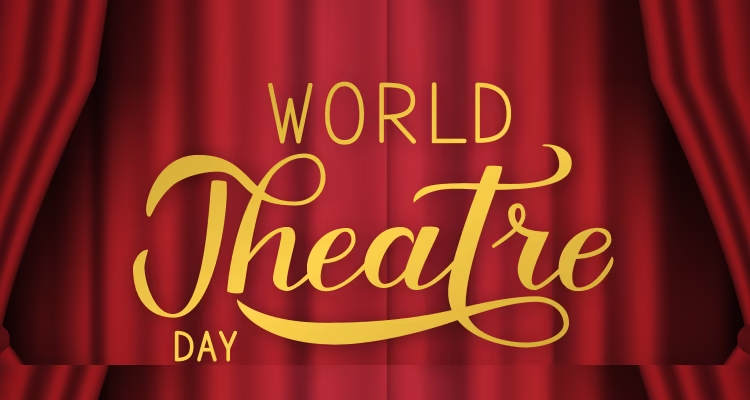
Doesn’t this feel especially true today, on March 27, as we celebrate World Theatre Day?
World Theatre Day is observed to highlight the importance of theatre, an art form that, unfortunately, seems to be losing its prominence in today’s fast-paced digital age. Theatre is, in many ways, a mirror of society. As rightly said, “Movies will make you famous, television will make you rich, but theatre will make you good.” This timeless art form is not only one of the oldest modes of entertainment but also a powerful medium to convey social messages.
For centuries, theatre has remained one of the most significant sources of entertainment for people. The word ‘drama’ is derived from the Greek word “dran,” meaning “to do,” while ‘theatre’ comes from “theatron,” meaning “the seeing place.” It is not just a place where we watch, but where we truly see, feel, and understand.
The International Theatre Institute (ITI) initiated World Theatre Day in 1961 to celebrate and promote theatre across the globe. Every year, ITI shares a special message delivered by a renowned theatre personality, reflecting on the art and its future. The first such message, in 1962, was delivered by Jean Cocteau.
Since the time of the ancient Greeks, theatre has remained a vital and influential art form. Even today, acting is a demanding yet potentially rewarding profession. World Theatre Day pays tribute to this incredible medium that continues to bring people together. Watching live performances remains a unique and enriching experience, offering a chance to connect with stories and emotions in real time.
However, with the rise of cinema, television, and digital media, theatre faces a gradual decline. This day serves as a wake-up call for governments, institutions, and society to recognize the value of theatre—not only as an art form but also as a contributor to cultural richness and economic growth.
The ITI, with more than 85 centres worldwide, encourages schools, colleges, and theatre communities to celebrate this day. The purpose is to spread awareness about the importance of theatre, promote artistic expression on a larger platform, and inspire support from policymakers and opinion leaders.
Despite facing challenges, theatre continues to hold a unique space. It thrives on the intimate connection between performers and the audience—two beings sharing emotions, ideas, dreams, and realities. It is not merely storytelling; it is a reflection of human existence and societal truth.
There is no denying that theatre has an inseparable connection with social, educational, and political life. It provides a platform where artists can express their ideas, question norms, and engage audiences in meaningful dialogue.
World Theatre Day, undoubtedly, stands as a celebration of this profound and enduring art form—one that continues to shape minds, reflect realities, and inspire change.