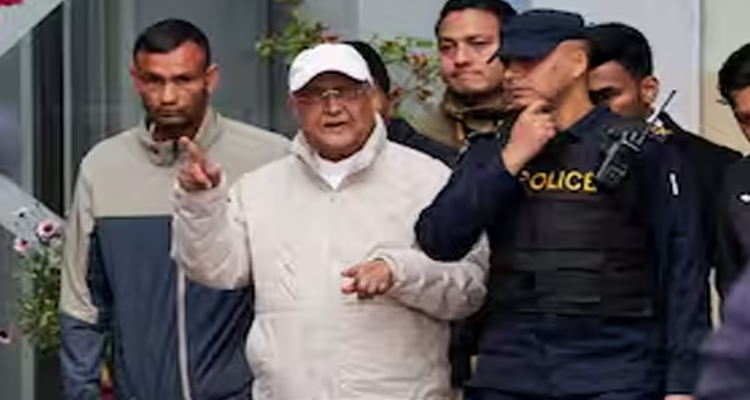
Kathmandu: In a dramatic escalation of Nepal’s post-protest political crisis, former Prime Minister K. P. Sharma Oli was arrested early Friday on charges of culpable homicide linked to the deadly “GenZ protests” of September 2025 that left at least 77 people dead.
Oli was detained from his residence in Bhaktapur, on the outskirts of Kathmandu, around 5 am local time, according to local media reports. Authorities simultaneously arrested former Home Minister Ramesh Lekhak, accused of ordering security forces to open fire on demonstrators during the unrest.
KP Sharma Oli arrested: Nepal’s former PM & Home Minister detained over Gen Z protest ‘September massacre’
READ: https://t.co/kF7WRqaiiKhttps://t.co/kF7WRqaiiK
— WION (@WIONews) March 28, 2026
New Government Acts Swiftly
The arrests come just a day after a new government led by Prime Minister Balendra Shah was sworn in. In its first Cabinet meeting, the government decided to implement the recommendations of a high-level judicial commission that investigated the violent protests.
Newly appointed Home Minister Sudan Gurung, himself associated with the protest movement, defended the action, stating on social media: “No one is above the law. This is not revenge… it is the beginning of justice.” In a sharper remark aimed at critics, he added: “You messed with the wrong generation.”
The Karki Commission Findings
The arrests follow a formal complaint by the Home Ministry and the issuance of arrest warrants based on findings of a judicial inquiry panel led by former judge Gauri Bahadur Karki.
The 907-page report of the commission—constituted on September 21, 2025 under the Commission of Inquiry Act—investigated the state response to the protests. It included members such as former AIG Bigyan Raj Sharma and legal expert Bishweshwor Prasad Bhandari.
The panel found evidence of “criminal negligence and recklessness” by authorities, citing:
- Failure to act on intelligence warnings
- Inadequate control over use of force
- Lack of effort to stop shootings despite escalating violence
While the report stopped short of confirming a direct order to open fire, it held that Oli and top officials failed to prevent the killings, including deaths of minors.
The commission recommended prosecution of Oli, Lekhak, and former police chief Chandra Kuber Khapung under Nepal’s penal code, with potential prison terms of up to 10 years.
Delayed Report, Mounting Pressure
The report had initially been expected within three months but faced delays, triggering widespread criticism. Portions of the findings began leaking to the media earlier this week, intensifying public pressure before the government formally placed the document in Parliament’s library.
Despite this, officials indicated procedural ambiguities remain, and critics have described the report as “disjointed” and difficult to operationalize.
Political Fallout Intensifies
Oli’s party, the Communist Party of Nepal (Unified Marxist–Leninist), has strongly condemned the arrest, calling it “politically motivated.”
Senior leader Raghuji Pant questioned the credibility of the investigation, while former Foreign Minister Pradeep Gyawali described the move as “political revenge” against the party’s chairman.
A Defining Moment for Nepal
The arrests mark a watershed moment in Nepal’s political trajectory, where accountability for state violence is being tested against deep partisan divides. As legal proceedings unfold, the case is expected to shape both the credibility of the new government and the future of democratic accountability in the Himalayan nation.