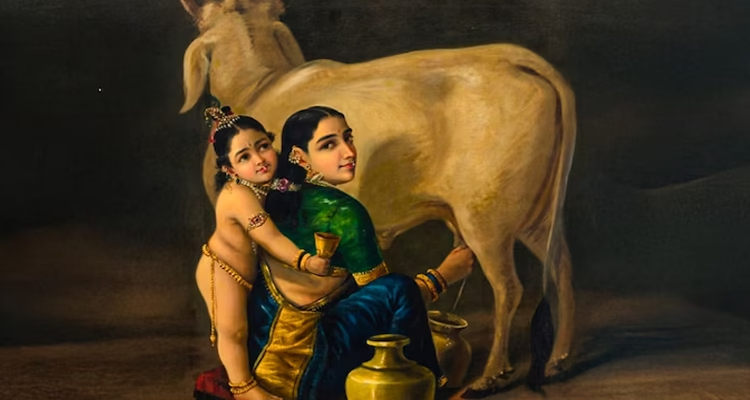
Mumbai: In a moment that has electrified India’s cultural and art circles, a 19th-century masterpiece by Raja Ravi Varma has rewritten history. His iconic Yashoda and Krishna has sold for an astonishing ₹167.2 crore, making it the most expensive Indian painting ever auctioned—a landmark that reflects both artistic legacy and rising cultural confidence.
A Fierce Auction That Redefined India’s Art Market
The painting went under the hammer at a high-profile sale conducted by Saffronart in Mumbai, where bidders—both domestic and international—engaged in an intense contest.
What makes this sale remarkable:
- The final price far exceeded its ₹80–120 crore estimate
- It shattered the previous Indian record, held by M. F. Husain’s Gram Yatra
- It signalled that India’s top collectors are now willing to compete globally for heritage art
Auction insiders described the bidding as “relentless,” a sign that rare works by Ravi Varma—especially those still in private hands—have become almost mythical in value.
The Buyer: A Billionaire with a Cultural Vision
The winning bid came from Cyrus S. Poonawalla, founder of the Serum Institute of India.
One of India’s most influential industrialists, Poonawalla is also known for his interest in art and heritage. In acquiring Yashoda and Krishna, he reportedly described the work as a “national treasure”, emphasising that such masterpieces should not remain hidden, but be shared with the public whenever possible.
His purchase reflects a broader shift—India’s wealthiest individuals are no longer just collecting art, but reclaiming and preserving cultural legacy.
The Painting: Where the Divine Meets the Everyday
Painted in the 1890s, Yashoda and Krishna is not just a religious image—it is a deeply human moment elevated into the sacred.
What the Artwork Captures:
- Yashoda, Krishna’s foster mother, engaged in the everyday act of milking a cow
- A playful child Krishna reaching out, infusing the scene with warmth and movement
- A serene rural backdrop that mirrors India’s pastoral life and emotional intimacy
Unlike traditional religious iconography, Ravi Varma brings the divine into a recognisable, lived-in world—making gods feel close, tender, and real.
Raja Ravi Varma: The Artist Who Changed Indian Visual Culture
To understand the magnitude of this sale, one must understand Raja Ravi Varma himself.