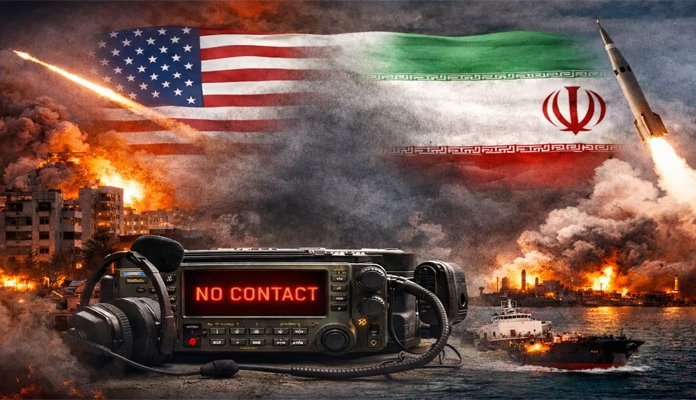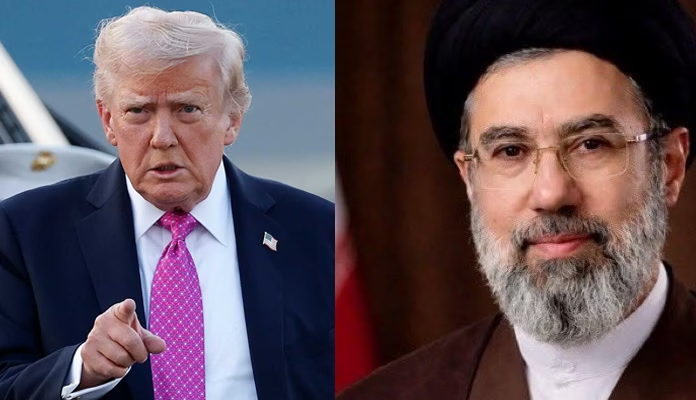
Washington: With tensions escalating in the Gulf, Donald Trump has issued a chilling warning to Iran, threatening swift and overwhelming military action if Tehran fails to meet a looming deadline tied to reopening the strategic Strait of Hormuz.
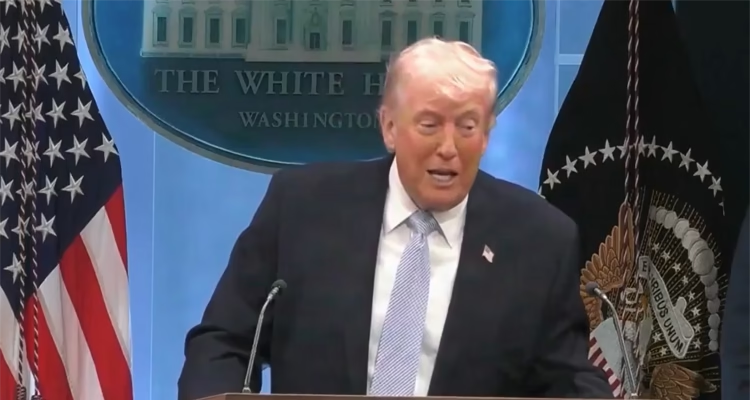
Speaking at a press conference on Monday, Trump said the United States has the capability to strike decisively, claiming Iran could be “taken out” in a single night. “The entire country could be taken out in one night — and that night could be tomorrow,” he warned, signaling the possibility of imminent action.
BREAKING: Amidst increasingly unhinged threats from Trump against Iran, he now says that the “entire country could be taken out in one night, and that night might be tomorrow night.” pic.twitter.com/AtzMy7FDJU
— Really American 🇺🇸 (@ReallyAmerican1) April 6, 2026
The former president also hinted at targeting critical Iranian infrastructure, including bridges and power plants, if Tehran refuses to comply or delays reopening the vital global energy corridor.
According to reports, Washington has set a deadline of Tuesday, 8 pm (Eastern Time) for Iran to respond to the proposed terms.
Iran Rejects Ceasefire, Pushes Long-Term Plan
Iran, however, has firmly rejected a US-backed ceasefire proposal, instead offering a comprehensive 10-point framework through the Islamic Republic News Agency (IRNA).
Tehran has ruled out any temporary truce, insisting on a permanent resolution to the conflict. Its proposal calls for a full cessation of hostilities, guaranteed safe passage through the Strait of Hormuz, removal of sanctions, and commitments toward post-war reconstruction.
In a notable diplomatic move, Iran conveyed its response to Washington via Pakistan on Monday.
Rising Tensions, Fragile Diplomacy
The latest developments underscore a deepening rift between Washington’s push for an immediate ceasefire and Tehran’s demand for a broader, long-term settlement.
Even as backchannel diplomacy continues, the sharp escalation in rhetoric and conflicting positions reflect the precarious state of negotiations, raising fears of a potential flashpoint in the already volatile region.