Islamabad Talks Fail: Iran Rejects US Demands, Hormuz Crisis Deepens
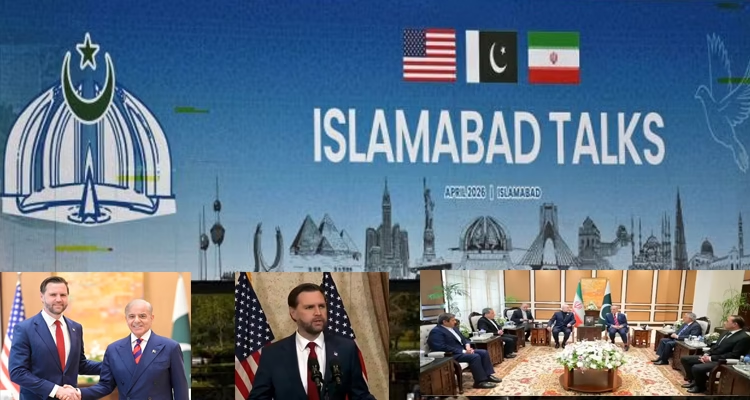
Islamabad: High-stakes diplomacy between the United States and Iran ended in a deadlock after marathon negotiations in Pakistan, with both sides trading sharp accusations and failing to secure any breakthrough.
After nearly 21 hours of intense discussions spread across three rounds, US Vice President JD Vance admitted that talks had stalled, stating Iran had “refused to accept” Washington’s conditions.
“We came in good faith to strike a deal, but unfortunately, there was no headway,” Vance said before departing, signaling a major diplomatic setback for the US.
🚨Just Now: JD Vance leaves Pakistan and heads back to the US after talks with Iran collapse. pic.twitter.com/09QQNPmF7C
— Jesse Cohen (@JesseCohenInv) April 12, 2026
US Push for Nuclear Assurances Falls Flat
Washington’s primary demand centered on a firm and verifiable commitment from Tehran to abandon any future pursuit of nuclear weapons.
Despite US claims that Iran’s earlier enrichment capabilities had been significantly degraded, officials acknowledged that Tehran offered no binding guarantees on halting future nuclear development—emerging as a key sticking point in the negotiations.
Donald Trump Claims ‘Total Military Victory’
Shortly after the talks collapsed, US President Donald Trump struck a defiant tone, asserting that American forces had already crippled Iran militarily.
“We totally defeated that country,” Trump claimed, alleging the destruction of Iran’s naval, air, and air الدفاع systems, and even hinting at the elimination of key leadership figures—claims Tehran strongly denies.
BREAKING: Vice President JD Vance says talks between the U.S. and Iran have ended after 21 hours without reaching an agreement. https://t.co/idhbnnAl3H
— The Associated Press (@AP) April 12, 2026
Strait of Hormuz Remains Flashpoint
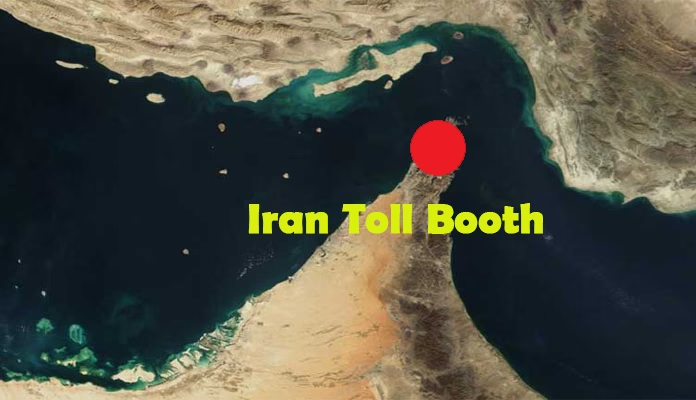
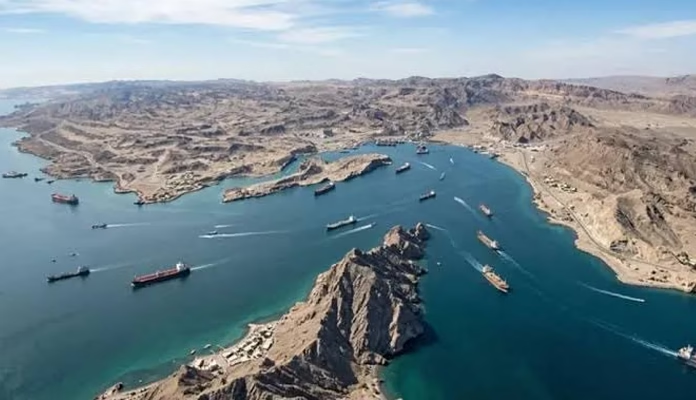
A major focus of the talks was the strategic Strait of Hormuz, a vital global النفط corridor that remains largely blocked amid the ongoing conflict.
The US Navy has reportedly intensified mine-clearing operations in the المنطقة to restore commercial shipping routes. Washington argues the move is critical for global trade stability, particularly for energy-dependent economies like China, Japan, and Germany.
However, Iran has issued a stern warning: any foreign military vessel entering the strait will face “severe consequences.” Tehran has indicated that only limited civilian maritime traffic may be permitted under strict conditions.
Tehran Accuses US of ‘War-Level Demands’
Iranian officials and state-linked media painted a starkly different picture of the failed talks. According to sources cited by Tasnim News Agency, Tehran had offered “reasonable proposals,” but accused Washington of making excessive and unrealistic demands.
In a sharply worded statement, Iran’s diplomatic mission claimed the US delegation “demanded what it could not achieve through war,” adding:
“The talks are over. The Strait remains closed. And the US Vice President is flying home empty-handed.”
The message underscored Tehran’s hardened stance, signaling little room for compromise under current conditions.
Pakistan Calls for Continued Dialogue
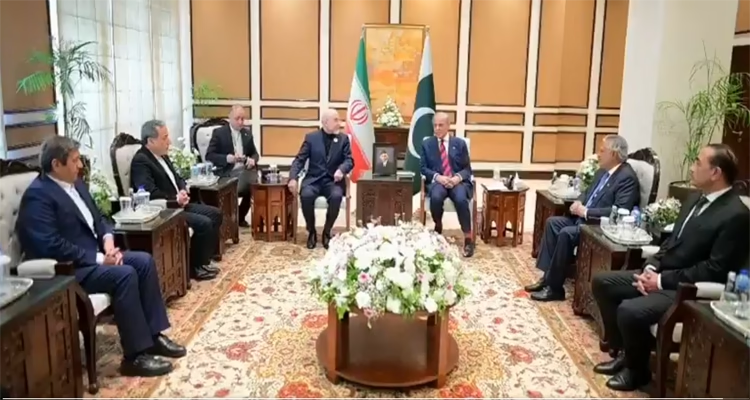
Reacting to the collapse, Pakistan’s Deputy Prime Minister and Foreign Minister Ishaq Dar thanked both sides for engaging in dialogue and reaffirmed Islamabad’s role as a mediator.
“We hope both nations continue efforts toward lasting peace and uphold ceasefire commitments,” Dar said, adding that Pakistan remains ready to facilitate further engagement.
War Fallout Deepens Regional Crisis
The ongoing conflict—reported to have begun on February 28—has already claimed thousands of lives, rattled global markets, and heightened geopolitical tensions across the Gulf.
Despite being one of the most significant US–Iran diplomatic engagements since the 1979 Islamic Revolution, the Islamabad talks have ended without progress—leaving the region on edge and the Strait of Hormuz crisis unresolved.
With diplomacy stalled, military posturing rising, and global النفط routes at risk, the collapse of these talks signals a dangerous escalation phase—where both sides appear entrenched, and the path to de-escalation remains uncertain.