Tel Aviv: A senior Israeli lawmaker has called on the United States to take firm military action against Iran, reflecting rising pressure within sections of Israel’s political establishment amid escalating regional tensions.
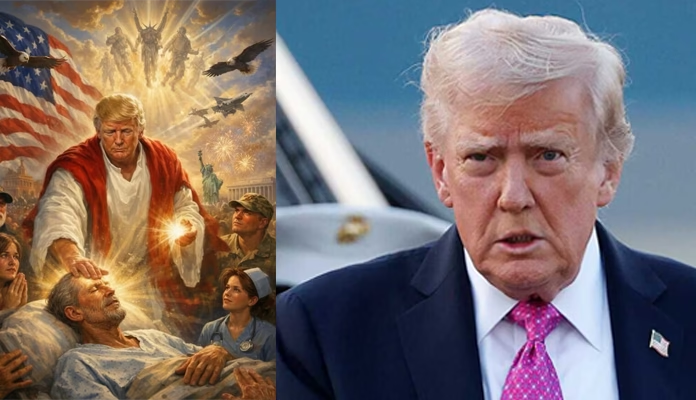
Zvika Fogel, who chairs the Knesset’s National Security Committee and belongs to the far-right Jewish Power party, delivered a blunt message directed at Donald Trump, saying: “If you have to shoot, shoot. Don’t quack.”
Israel tells Trump to ‘SHOOT’
‘DON’T QUACK’ — Parliament’s National Security Committee head pic.twitter.com/fYeAM2Tewr
— RT (@RT_com) April 12, 2026
Hardline Voices Grow Louder
Fogel’s remarks come at a sensitive moment, as a fragile ceasefire between the US and Iran holds despite the collapse of recent high-level talks in Islamabad. His statement underscores frustration among hardline Israeli leaders who favor decisive military action over prolonged diplomacy.
Analysts note that such rhetoric reflects a broader divide within Israel’s political landscape, where some leaders are increasingly skeptical of ceasefire arrangements and diplomatic negotiations with Tehran.
Trump Signals Tough Posture
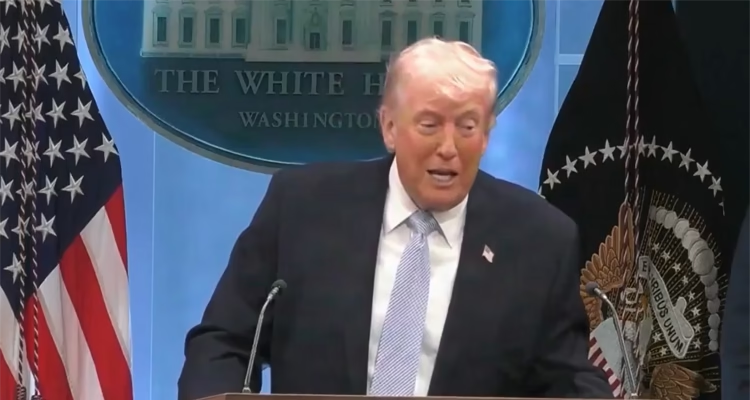
President Trump has maintained a strong stance on Iran, repeatedly warning of severe consequences if tensions escalate further. He has indicated that the United States remains prepared for decisive action if negotiations fail, even as Washington weighs diplomatic options.
The comments also come as Trump prepares for upcoming international engagements, including a potential visit to Beijing, amid growing global concern over the widening conflict.
Diplomacy Stalls, Risks Rise
The backdrop to these developments is the failure of US-Iran talks after prolonged negotiations, leaving key disputes unresolved—particularly over Iran’s nuclear programme, missile capabilities, and regional security dynamics.
With ceasefire conditions fragile and rhetoric intensifying, experts warn that statements advocating military action could further complicate diplomatic efforts and heighten the risk of escalation in West Asia.