13 Bills, 19 Days, High Drama: Inside Parliament’s Winter Session
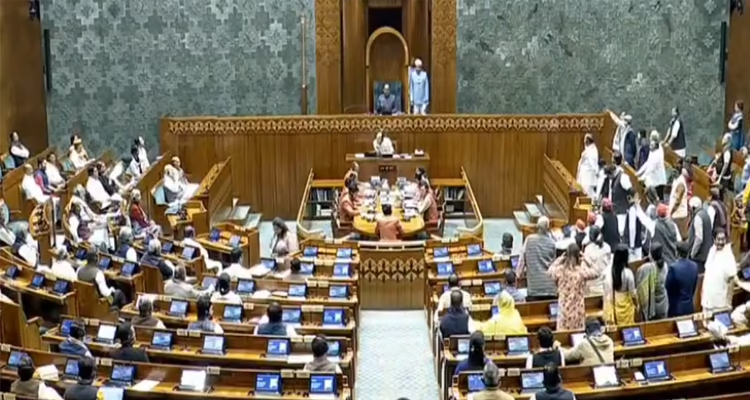
New Delhi: The Winter Session of Parliament opened on Monday with a packed legislative agenda and immediate political tensions, as both Houses convened for the first of 15 sittings scheduled over 19 days. Thirteen bills are slated for passage during the session, which is expected to be one of the briefest in recent history.
When the Lok Sabha met at 11 AM, Speaker Om Birla began proceedings with obituary references, paying tribute to Dharmendra, Col. (Retd.) Sona Ram Choudhary, Prof. Vijay Kumar Malhotra, and Ravi Naik. Members observed a moment of silence in acknowledgement of their public service.
Empowering Young Leaders In Parliament!
While addressing the media before the start of the winter session of Parliament, PM @narendramodi shared that young MPs must be given more opportunities to participate meaningfully. He said their fresh perspectives can strengthen… pic.twitter.com/O4euiKa1a5
— MyGovIndia (@mygovindia) December 1, 2025
However, the tone shifted rapidly when Opposition MPs began sloganeering during Question Hour, raising concerns over the Special Intensive Revision of electoral rolls, among other issues. Expressing displeasure, Speaker Birla reminded members that disruption “is not appropriate,” and after repeated disorder, adjourned the House until 12 PM.
Meanwhile in the Rajya Sabha, three Jammu & Kashmir National Conference members—Gurwinder Singh Oberoi, Chowdhry Mohammad Ramzan and Sajjad Ahmed Kichloo—took oath as new MPs. Chairman C.P. Radhakrishnan presided over the Upper House for the first time. Welcoming him, Prime Minister Narendra Modi lauded his journey “from an ordinary background to Vice President,” calling it a testament to India’s democratic strength.
Outside the chambers, PM Modi launched a pointed critique of the Opposition, invoking its recent electoral defeat in Bihar. He accused rival parties of treating Parliament as “a warm-up arena for elections” or “an outlet for frustration after defeat.”
“There are states where, after being in power, leaders are now facing such strong anti-incumbency that they are unable to face the public. Instead, they come here and vent their anger inside the House,” Modi said, urging leaders to maintain dignity and avoid turning Parliament into a battleground.
The Prime Minister also touted India’s economic momentum, highlighting the country’s Q2 GDP growth of 8.2% — the strongest in six quarters — saying it boosts confidence in India’s march toward developed nation status.
Yet, the session’s tone was set early: contentious, confrontational, and politically charged.
At Sunday’s all-party meeting chaired by Parliamentary Affairs Minister Kiren Rijiju, Opposition leaders demanded urgent debates on national security after the Delhi blast, the electoral roll revision, air pollution in Delhi, rural distress, foreign policy concerns, and what they described as “threats to democratic institutions.”
Congress MP Jairam Ramesh slammed the government for convening what he called an unusually short session and warned against rushing major legislation without scrutiny. He pointed out that only two of the 13 bills had passed through their respective Standing Committees.
“This session of 15 days will be the shortest in Parliamentary history… Ten Bills have not been examined,” Ramesh posted on X, warning that more bills may be pushed through at the last minute.
With the Opposition signaling an aggressive stance and the government firm on its agenda, the next 19 days promise intense political theatre inside Parliament — and possibly, significant legislative action.