
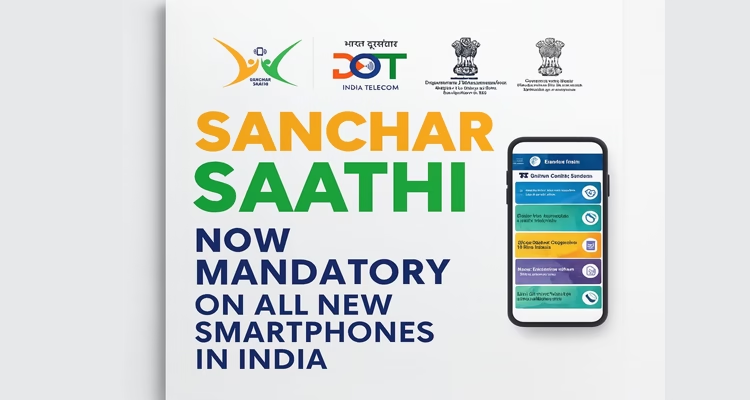
Sanchar Saathi to Become Default System App on Every Phone Sold in India
New Delhi: In a sweeping digital-security directive, the Department of Telecommunications (DoT) has ordered all smartphone manufacturers in India to permanently pre-install the government’s cybersecurity tool ‘Sanchar Saathi’ on every new device sold in the country — and crucially, ensure that users cannot remove it.
The mandate extends beyond future models: existing phones must receive the app via software updates, effectively making the tool a baked-in system feature. Manufacturers have been given a three-month window to comply, a deadline that sources say may trigger resistance from major players including Apple, Samsung, Xiaomi, Oppo, and Vivo. Requests for official comment from both industry and the DoT have so far gone unanswered.
Your new phone will come with a safety upgrade- #SancharSaathi, pre-installed by default.#DoT #Telecom @JM_Scindia @PemmasaniOnX @neerajmittalias @CNBCTV18Live @USOF_India @pib_comm @PIB_India pic.twitter.com/ZN5gmp1ivC
— DoT India (@DoT_India) December 1, 2025
A senior government representative described the move as part of India’s escalating effort to strengthen “cybersecurity and anti-spam defenses” nationwide.
Mandatory App With Expanding Capabilities
Sanchar Saathi, currently available as an optional download on app stores, will become unavoidable once this directive takes effect. Launched in January, it already boasts over 50 lakh downloads and has reportedly:
-
Blocked 37.28 lakh lost or stolen phones, and
-
Helped trace 22.76 lakh more devices
The app uses a phone’s IMEI — the unique 15-digit identifier used by mobile networks — to track, verify, and block devices. It also assists authorities in tackling counterfeit smartphones and lets users flag scam calls or fraudulent communications, including on encrypted platforms like WhatsApp.
SIM Binding: The Next Big Shift
This push is part of a broader tightening of India’s digital-security protocols. Just last week, the government instructed messaging apps such as WhatsApp, Signal, and Telegram to implement SIM binding, meaning:
-
A user’s account would only work with the original SIM used during registration
-
Removing the SIM would automatically log them out
-
Services like WhatsApp Web may now require reauthentication every six hours
Currently, user verification on these apps hinges largely on SMS OTPs. Under SIM binding, developers must instead leverage the SIM’s IMSI, the globally unique subscriber identifier stored on the card.
Industry on Edge
The non-removable nature of the app may raise concerns around user choice, privacy, and global compliance standards — especially for manufacturers accustomed to uniform OS builds across markets. For now, the industry is silent, but privately, executives acknowledge that negotiations, technical challenges, and legal debates likely lie ahead.