
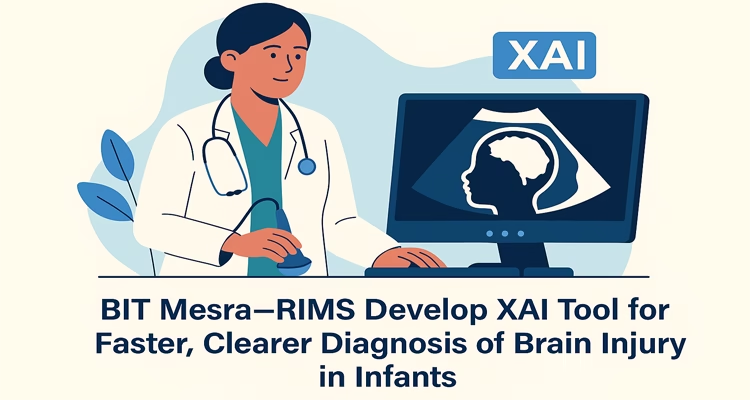
BIT Mesra–RIMS Develop XAI Tool for Faster, Clearer Diagnosis of Brain Injury in Infants

Breakthrough XAI Tool from Jharkhand Team to Improve Brain Injury Detection in Newborns

Ranchi: In a major technological breakthrough for neonatal healthcare, researchers at Birla Institute of Technology (BIT) Mesra, in partnership with RIMS Ranchi, have developed an Explainable Artificial Intelligence (XAI) system capable of detecting Hypoxic-Ischemic Encephalopathy (HIE) in newborns using transcranial ultrasound images.

The innovation is part of an ICMR-funded project titled “Explainable AI for Hypoxic Ischemic Encephalopathy Detection using Ultrasound Images in Jharkhand Neonates: A Deep Learning Approach,” backed by a grant of ₹40.58 lakh.

The newly developed platform combines cutting-edge computer vision, deep-learning algorithms, and XAI techniques to interpret cranial ultrasound scans and determine whether an infant shows signs of normal brain development or abnormalities linked to HIE — a serious condition caused by inadequate oxygen or blood flow during birth.

Designed with a clinician-friendly interface, the system simplifies complex image analysis, reduces interpretation errors, and boosts diagnostic confidence. Experts say the technology could be a game-changer for resource-limited hospitals, where early detection is critical to saving lives and preventing long-term neurological damage.

The research team includes Principal Investigator Dr. K. Sridhar Patnaik, along with Co-PIs Dr. Itu Snigdhi, Dr. Rajeeva Mishra, Dr. Rajeev Kumar Ranjan, and Dr. M. Rajesh Kumar Rao, supported by project scientists Saket Kumar Singh and Kundan Kumar.

According to the team, the project marks a significant leap toward AI-driven neonatal care in India, with strong potential for widespread clinical adoption and large-scale deployment across the country.

What Is Hypoxic-Ischemic Encephalopathy (HIE)?

Hypoxic-ischemic encephalopathy, or HIE, is a type of brain injury that happens when a newborn’s brain doesn’t receive enough oxygen or blood flow before, during, or shortly after birth. Its impact can range widely — some babies recover fully, while others may develop long-term conditions such as cerebral palsy, developmental delays, or epilepsy. The severity often depends on how long the brain was deprived of oxygen and which areas were affected.

Causes

HIE generally results from complications that cut off or reduce the oxygen supply, such as:

  • Umbilical cord problems (knot, prolapse, compression)
  • Maternal complications like placental abruption, infection, or high-risk pregnancies
  • Labor and delivery issues, including prolonged labor or abnormal fetal heart rate

Symptoms

  • Signs of HIE can appear immediately after birth or emerge over time. Common symptoms include:
  • Breathing difficulties
  • Seizures or jerky, unusual movements
  • Low muscle tone (floppy or weak limbs)
  • Poor responsiveness or reduced alertness
  • Weak or absent newborn reflexes
  • Low heart rate or acidosis (too much acid in body fluids)
  • Presence of meconium-stained amniotic fluid

Effect on Other Organs

When oxygen is lacking, not just the brain but also organs like the heart, kidneys, and liver may suffer. These organs often recover with treatment, but the resulting brain injury may be permanent, making early detection and intervention crucial.


Ashis Sinha

About Ashis Sinha

Ashis Sinha, Journalist

View all posts by Ashis Sinha →

Leave a Reply

Your email address will not be published. Required fields are marked *