
 Dr. Vinod Chandrashekhar Dixit
Ahmedabad
Spitting in public—whether driven by illness or habit—is an unhealthy and unacceptable practice. It reflects a lack of civic sense and poor awareness of basic hygiene. While much attention is paid to coughing and sneezing as routes of disease transmission, spitting receives far less emphasis, despite posing comparable public health risks.
Medical experts and public health officials warn that spitting, like coughing, can spread infections through respiratory droplets. Saliva and mucus often carry viruses and bacteria that can easily pass from person to person. The risk is heightened among users of chewing tobacco, who frequently spit in public places, endangering not only themselves but also those around them. Contaminated saliva may carry carcinogenic agents that affect the lining of the mouth, oesophagus, stomach, and even the bladder. Saliva can host a range of diseases and infections, making public spitting a serious health concern.
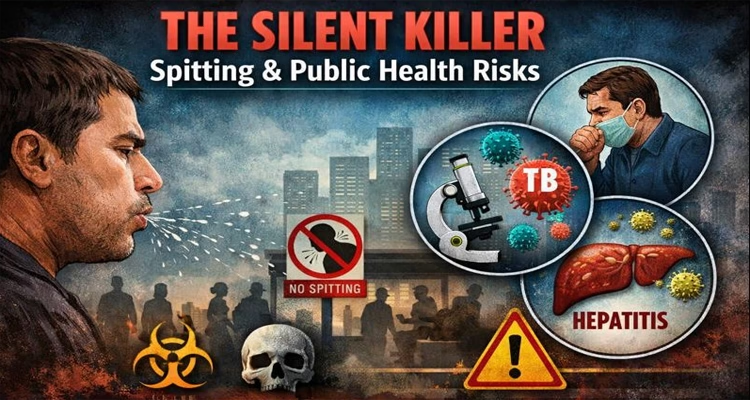
Spitting in public is a revolting and unhygienic habit that contaminates surfaces, water, and air with a cocktail of pathogens. It has been linked to the spread of diseases such as tuberculosis, pneumonia, and COVID-19, as well as infections like hepatitis A and E and various gastrointestinal illnesses. Recognising these dangers, laws prohibit spitting in public places, workplaces, and public transport, mandating warning displays and imposing fines on offenders. Such measures aim to reinforce the message that spitting is neither acceptable nor socially responsible.
Unfortunately, in today’s so-called civilised society, spitting is sometimes seen as a form of bravado. This misguided attitude ignores the severe consequences associated with the habit. Ulcers, cancers, and the spread of infectious diseases are major risks. Psychological factors, including issues related to self-image, may also contribute to the development of habitual spitting. The problem becomes especially dangerous in densely populated areas, where close proximity allows diseases to spread more easily. It is not only the person who spits who is at risk—everyone nearby becomes vulnerable. Beyond health hazards, spitting creates an unpleasant environment and reflects poorly on community hygiene and personal responsibility.
Governments and health organisations around the world are working to curb this practice through awareness campaigns, stricter enforcement, and penalties. Simple alternatives—such as using tissues or designated spittoons—can significantly reduce health risks. From a public health perspective, spitting can transmit infectious agents including tuberculosis, hepatitis, viral meningitis, cytomegalovirus, and the Epstein–Barr virus, which causes illnesses such as glandular fever. For these infections to become dangerous, contaminated saliva need only enter the body through an open sore, the mouth, or even the eyes.
Most people rightly consider spitting an obnoxious and filthy habit that spreads germs and endangers health. Breaking this habit is essential. By discouraging spitting and promoting responsible behaviour, society can move towards a cleaner, healthier, and more respectful public environment for all.