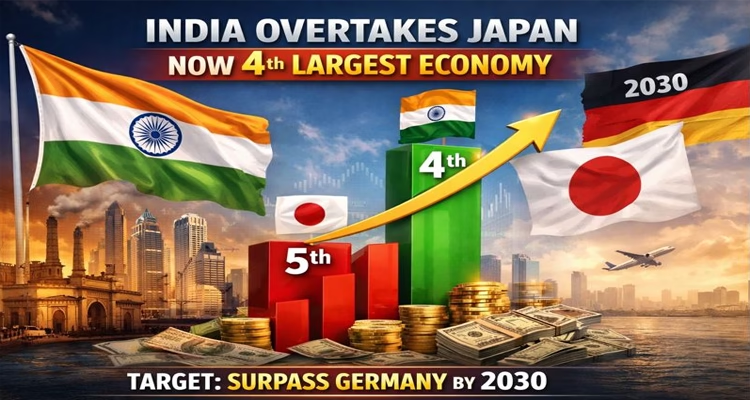
New Delhi: India has officially overtaken Japan to emerge as the world’s fourth-largest economy, underscoring its rapid rise as one of the fastest-growing major economies globally, the government said on Tuesday.
With sustained momentum in domestic demand and structural reforms, India is now on track to surpass Germany and become the third-largest economy by 2030, with its gross domestic product projected to touch USD 7.3 trillion.
In a statement, the government said the country’s long-term economic vision—aimed at achieving high middle-income status by 2047, the centenary year of Independence—is being powered by strong growth fundamentals, reform-driven efficiency and expanding social progress.
❗️ India overtakes Japan and becomes the 4th biggest economy — India’s government economic note
India ‘is poised to displace Germany from the third rank in the next 2.5-3 years’ pic.twitter.com/elE5R61X5R
— RT (@RT_com) December 30, 2025
Economic data for FY 2025–26 point to growing resilience despite global trade uncertainties. India’s GDP recorded a six-quarter high in the second quarter, supported largely by robust private consumption and steady urban demand.
High-frequency indicators paint a favourable macro picture: inflation has remained below the lower tolerance band, unemployment trends are easing, exports—especially services—are improving, and credit flow to the commercial sector remains strong. Together, these factors have helped sustain overall economic activity.
According to official estimates, real GDP grew 8.2% in Q2 FY 2025–26, up from 7.8% in the previous quarter. Real Gross Value Added (GVA) expanded 8.1%, driven by buoyant performance in the industrial and services sectors.
Reflecting this strength, the Reserve Bank of India has revised its GDP growth forecast for FY 2025–26 to 7.3%, up from an earlier projection of 6.8%. Growth is being supported by firm domestic demand, GST and income-tax rationalisation, softer global crude prices, front-loaded government capital expenditure, and accommodative financial conditions.
Looking ahead, policymakers see multiple tailwinds—favourable agricultural prospects, low inflation, strong corporate balance sheets, and rising services exports—adding to growth momentum. Faster conclusion of trade and investment agreements and continued reforms are expected to provide further upside.
Describing the current phase, the government said India is experiencing a rare “Goldilocks moment”—a combination of high growth and low inflation—positioning the country firmly among the world’s leading economic powers.
India’s rise past Japan marks a significant milestone, reinforcing its growing influence in the global macroeconomic landscape.