
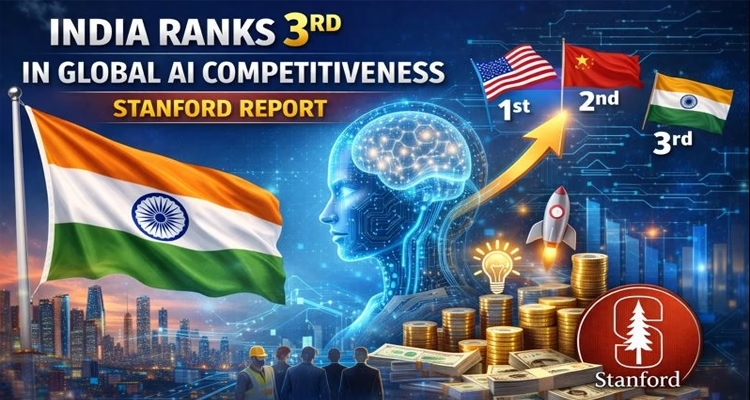
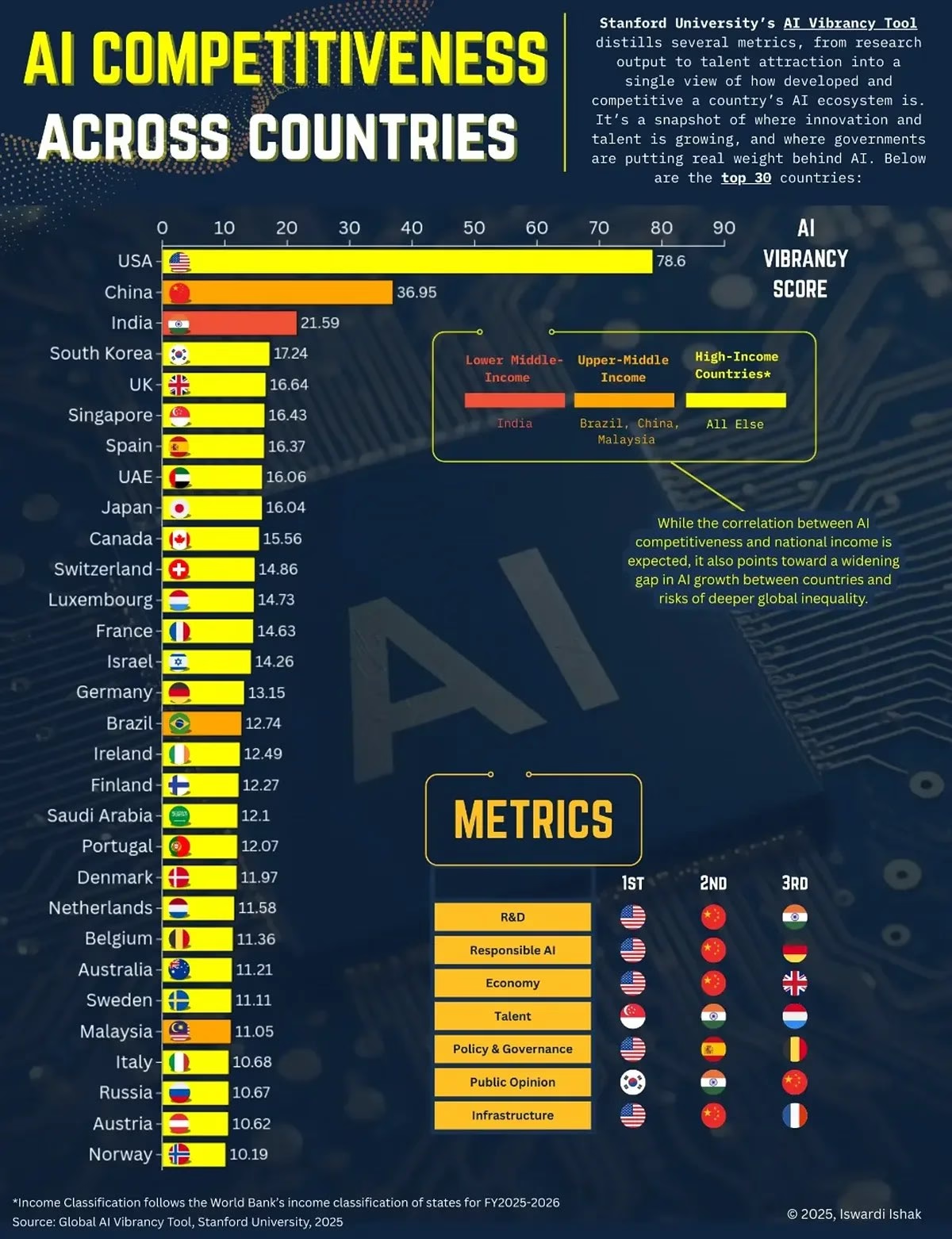
New Delhi: India has emerged as the world’s third most AI-competitive nation, marking a major milestone in its technology and innovation journey. According to the 2025 Global AI Vibrancy Tool released by Stanford University, India now trails only the United States and China in overall AI competitiveness.
The report, which tracks global AI growth and innovation between 2017 and 2024, highlights India’s rapid progress across key pillars such as talent availability, research output, startup activity, infrastructure, policy frameworks, and economic impact. Analysts say the ranking reflects India’s transition from an emerging AI player to a frontline global contender.
India’s rise to third place globally in #AI competitiveness reflects years of focused investment in talent, research and digital infrastructure. This progress shows how India is building capability, not just adoption, in emerging #technologies. @GoI_MeitY pic.twitter.com/Y7VQSSkmjm
— Himanta Biswa Sarma (@himantabiswa) December 16, 2025
Strong talent base and economic impact
India’s expanding AI ecosystem is anchored by a large and skilled workforce. Over six million people are currently employed in the country’s broader tech and AI ecosystem, while the Indian technology sector is projected to cross USD 280 billion in revenue this year.
Long-term projections suggest AI could add USD 1.7 trillion to India’s economy by 2035, significantly boosting productivity across sectors ranging from manufacturing and finance to healthcare and agriculture.
AI moving beyond labs into daily life
Experts note that AI adoption in India is no longer confined to research institutions or large corporations. AI-driven tools are increasingly being used to improve healthcare delivery in remote areas, enable precision farming, personalise education, enhance urban governance, and strengthen public service delivery through data-driven decision-making.
This inclusive approach to AI development has been repeatedly emphasised by policymakers, who see the technology as a key enabler of equitable growth rather than a niche innovation.
Policy push and institutional support
Much of India’s AI momentum is being driven by targeted public policy interventions. Flagship initiatives such as the IndiaAI Mission, approved in March 2024 with an outlay of over ₹10,300 crore, aim to expand computing capacity, support startups, build indigenous AI models, and promote responsible AI use. The mission is implemented under the Ministry of Electronics and Information Technology, or Ministry of Electronics and Information Technology.
India has also rapidly scaled its AI infrastructure. Against an initial target of 10,000 GPUs, the country has already deployed around 38,000 GPUs, providing subsidised access to high-end computing power for researchers, startups and academic institutions.
Startup surge and enterprise adoption
India today hosts nearly 1.8 lakh startups, with industry estimates suggesting that close to 90 percent of new startups launched last year incorporated AI into their products or services. The country is also home to over 1,800 Global Capability Centres, more than 500 of which focus specifically on AI and data-driven technologies.
According to the NASSCOM AI Adoption Index, a large majority of Indian enterprises are actively using AI solutions, particularly in sectors such as banking, financial services, retail, automotive, manufacturing and healthcare.
Focus on inclusion and governance
India’s AI strategy places strong emphasis on inclusion and ethical deployment. A recent report by NITI Aayog on AI for inclusive societal development underlined how AI can empower informal workers by expanding access to skilling, finance, healthcare and education, while also helping bridge social and economic divides.
At the same time, initiatives under the “Safe and Trusted AI” framework are focusing on issues such as bias mitigation, data privacy, explainability and governance testing, positioning India as a responsible AI innovator.
Global recognition grows
The Stanford ranking places India among the top four countries worldwide in AI skills, capabilities and policy readiness. India is also the second-largest contributor to AI projects on GitHub, reflecting the depth of its developer community and open-source engagement.
With a strong STEM talent pipeline, expanding digital infrastructure and sustained policy support, experts believe India is well placed to leverage AI for economic growth, social transformation and its long-term vision of Viksit Bharat by 2047.