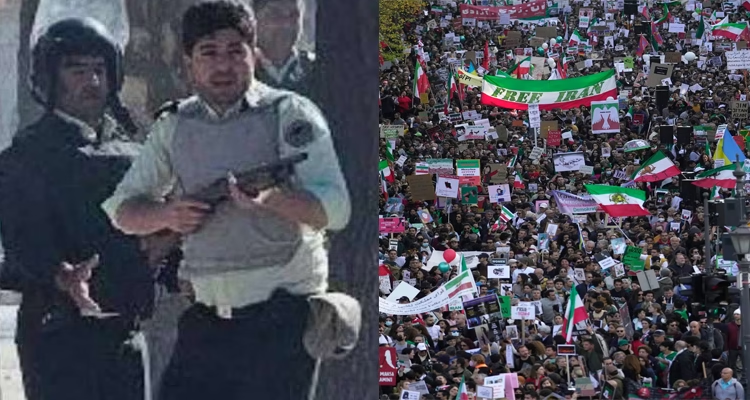
Tehran: Iran is witnessing a fresh wave of unrest as protests driven by economic distress sweep across urban centres and outlying provinces, leaving at least seven people dead and pushing public anger beyond bread-and-butter issues into open political defiance.
The agitation, which first surfaced among traders and small business owners in Tehran, has rapidly broadened in scope. As the national currency weakens and prices surge, students, workers and rural residents have joined demonstrations, turning localised protests into a nationwide challenge to the ruling clerical establishment.
BREAKING || Protests Turn Violent in Iran
– Demonstrations erupt over Iran’s struggling economy
– Clashes between protesters and security forces leave at least 7 dead@RishabhMPratap shares more details with @MeenakshiUpreti. pic.twitter.com/DcdrPPXggF
— TIMES NOW (@TimesNow) January 2, 2026
Rising living costs, shrinking household incomes and frustration with state-run subsidy mechanisms have emerged as common rallying points. In several cities, slogans have shifted from economic grievances to calls questioning the legitimacy of the Ayatollah-led system itself.
Reform signals amid unrest
Seeking to calm tempers without surrendering authority, President Masoud Pezeshkian has announced steps aimed at projecting change. The government has highlighted a renewed focus on tackling corruption and hinted at replacing indirect subsidies with direct financial transfers to citizens—an implicit acknowledgment that current policies have failed to shield the public from economic shocks.
Political analysts say the messaging is designed to signal responsiveness while preserving the core power structure, offering reform at the margins rather than a systemic overhaul.
VIDEO | Explained in 60 seconds: Iran protests: 7 killed, unrest spreads beyond Tehran.
Protests in Iran over surging inflation and a collapsing currency have spread beyond Tehran, with authorities reporting at least seven deaths, including protesters and security personnel.… pic.twitter.com/8DWWDyrRj3
— Press Trust of India (@PTI_News) January 2, 2026
Economic heads roll
To reinforce the image of accountability, Tehran has moved against senior figures in its economic establishment. Top officials linked to monetary policy, including leadership at the Central Bank of Iran, have reportedly been removed or reassigned. Such actions, critics argue, provide a visible scapegoat for public anger without addressing deeper structural flaws.
Security clampdown
Alongside reformist overtures, authorities have tightened security. Government offices have been temporarily shut in parts of the country, and police deployments have increased at protest sites. Confrontations have grown more frequent, resulting in deaths, injuries and arrests.
While officials continue to appeal for calm and national unity, the simultaneous use of force underscores a dual-track strategy—offering concessions on one hand and deterrence on the other.
Foreign governments and rights groups have expressed concern over the escalating violence, warning that prolonged instability in Iran could have wider regional consequences. Whether Tehran’s mix of limited reforms, personnel changes and security measures can contain the unrest—or merely delay a deeper confrontation—remains an open question.