 Dr. Vinod Chandrashekhar Dixit
Drugs are often taken out of choice at first, but sooner than one realizes, resisting them becomes extremely difficult. Recovery is not easy, and even after treatment, the risk of relapse remains high.
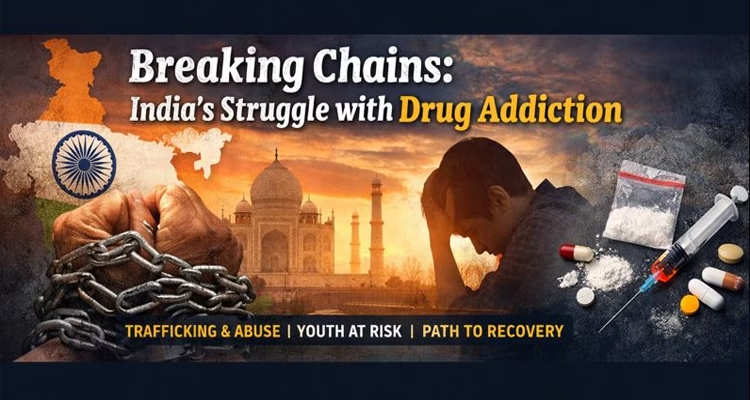
It is a known fact that the drug racket operates internationally, and some countries function as major transshipment points for illegal drug circulation. India, due to its strategic geographic location, has become more vulnerable to drug-related activities, including trafficking and local consumption. The growing influence of westernization, changing family structures, and peer pressure are among the major reasons behind rising drug abuse.
Our society must change its attitude towards drug users. Instead of treating them as criminals or outcasts, they should be provided with support, care, and proper rehabilitation. Moral education should be made an essential part of the school curriculum, and awareness must begin at an early stage. To tame and trample this monster of drug abuse, we must go to the root of the problem and treat drug users with humanity, tolerance, understanding, sympathy, and care.
Social workers, teachers, and above all parents—especially mothers—can play a vital role in this mission. Many counselling and de-addiction centres have already contributed to creating a national awakening, but far more efforts are required from every section of society.
Drugs are primarily chemicals that interfere with the communication system of the human brain. They disrupt how nerve cells send, process, and receive information. Drugs achieve this in two main ways: by imitating the brain’s natural chemical messengers or by overstimulating the brain’s reward circuits. Substances such as heroin and marijuana are chemically similar to neurotransmitters, which allows them to hijack the brain’s normal functioning.
Drug addiction can develop at any age, but those who begin using drugs at an early stage face the highest risk. This is because the areas of the brain responsible for self-control, judgment, and decision-making are still developing. This is why teenagers are particularly vulnerable to drug abuse.
Governments have the responsibility to counter both drug trafficking and drug abuse, but communities can also play a major role. Families, schools, civil society, and religious organizations must work together to rid their communities of drugs.
According to national surveys, hardly one-third of drug dependents have ever sought treatment. Findings from other agencies reveal that the figure can be as low as two percent. This is largely because drug abuse is not seen as a medical problem. The lack of rehabilitation centres and limited access to treatment facilities also discourage people from seeking help.
The breakdown of the traditional joint family system, absence of parental care in working households, and the decline of moral and religious values have further contributed to the rise in drug addiction. Many turn to drugs as a way to escape the harsh realities of life.
Drug trafficking is a major crime. Killing someone or helping someone to kill himself is a crime, and those who traffic drugs and spread them across the country are committing an equally serious offense. Drug dealing is a scourge that can drag even a mature and intelligent society into moral collapse. It is better to nip this evil in the bud so that our country does not fall into the same devastating crisis seen in the West.
Creating awareness about the dangers of substance abuse and bringing about behavioural change are essential parts of the National Drug Master Plan. There must be zero tolerance for peddlers and pushers who destroy lives and push victims into irreversible addiction, often leading them to serious crimes such as murder and rape.
If we truly want to stop this menace, harsh steps and stringent punishments are necessary. At the same time, love, care, and compassion are the strongest shields to protect our youth from falling into the clutches of drugs. Societal control must go hand in hand with a strong legal framework.
Let us develop our lives, our communities, and our identities—
Without Drugs.