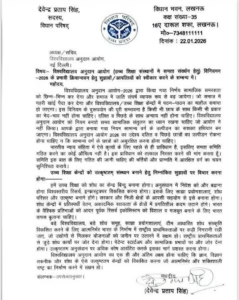
Lucknow: Senior Uttar Pradesh Legislative Council member Devendra Pratap Singh has raised serious objections to the UGC (Promotion of Equity in Higher Education Institutions) Regulations, 2026, warning that the move could “fracture social harmony and intensify caste conflict” across the country.
In a formal letter dated January 22, 2026, addressed to the Chairperson/Secretary of the University Grants Commission (UGC), Singh urged the Commission to reconsider the framework and invited a wider, inclusive dialogue before enforcing the new rules.
“Will Deeply Divide Society”
Singh said the regulations, as framed, could disturb the delicate social balance and widen caste-based divisions. He stressed that while equity is necessary, it must not undermine social cohesion or marginalize any section of students.
Concern Over ‘Uniform’ Approach
The MLC cautioned that the proposed rules appear to move towards a uniform system that may dilute the spirit of social justice enshrined in the Indian Constitution. He argued that removing safeguards for disadvantaged groups could reverse decades of progress in inclusive education.
Call for Broader Consultation
Singh demanded that the UGC engage with all stakeholders—students, teachers, social groups and policymakers—before finalising the regulations. He said policies affecting higher education must be rooted in ground realities, constitutional values and social sensitivity.
Vision for Strong Higher Education
While opposing the current draft, Singh supported reforms that:
-
Make research the core of higher education
-
Strengthen infrastructure, laboratories and libraries
-
Promote team-based research and innovation
-
Ensure fair funding and opportunities for all sections
-
Align Indian universities with global research standards
“Reforms Must Unite, Not Divide”
Singh concluded that higher education should empower, not polarise, and urged the UGC to rework the regulations to ensure that equality measures promote unity, inclusion and academic excellence, rather than social discord.
The letter has triggered debate among academic and policy circles, with many now calling for a review of the UGC 2026 equity framework before its nationwide rollout.