 by Dr. Vinod Chandrashekhar Dixit
Do frequent elections in India resemble a never-ending festival season? With elections taking place every few months across different states, the Election Commission of India is under constant pressure. While democracy thrives on participation, excessive electoral cycles have now become a serious governance challenge.
Experts argue that repeated elections disrupt long-term policymaking. Every decision is viewed through the prism of electoral gain, forcing governments into short-term populism while neglecting structural reforms that require sustained vision and stability.
Rising Financial Burden on the Nation
The cost of elections has skyrocketed over the decades. In 1952, India’s first Lok Sabha election cost about ₹11 crore. By 2014, this figure had surged to nearly ₹3,870 crore. In 2019, the cost jumped by almost 40%, touching an estimated ₹50,000 crore, according to the Centre for Media Studies.
These figures do not even account for the hidden expenses associated with vote-buying practices such as the distribution of television sets, liquor, cash, and other inducements.
What Does “One Nation, One Election” Mean?
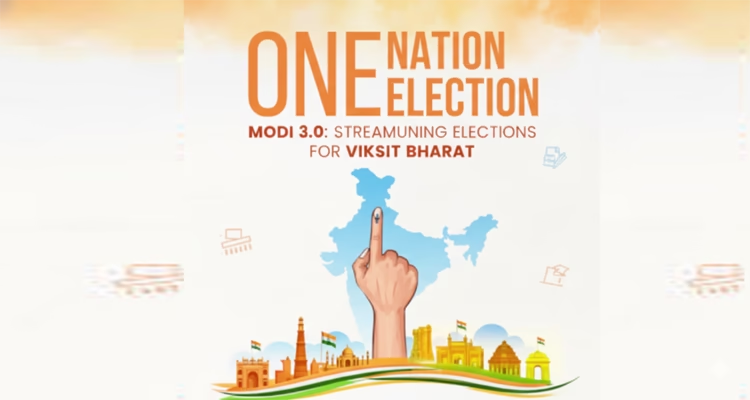
“One Nation, One Election” proposes synchronising elections to the Lok Sabha and all State Legislative Assemblies, allowing citizens to vote for both on the same day. This reform aims to reduce costs, administrative burden, and policy paralysis caused by constant election cycles.
Key Advantages of Simultaneous Elections
- Substantial savings of public funds
- Reduced election fatigue among voters
- Higher voter turnout due to a single, nationwide polling exercise
- Stable governments with a clearer mandate
- Improved governance, as the Model Code of Conduct would be enforced only once
- Better use of security forces, who are repeatedly diverted from core duties
- Less disruption to schools and hospitals, as teachers and health workers are often deployed for election duties
Expert and Committee Support
The Law Commission (1999), chaired by Justice B. P. Jeevan Reddy, recommended holding simultaneous elections. The Sarkaria Commission and the Nanda Committee also supported this reform, citing efficiency and governance benefits.
Constitutional Challenges
Implementing this reform would require constitutional amendments, especially to Articles 83(2) and 172(1), which define the tenure of Parliament and State Assemblies. Close coordination between the Election Commission and state governments would be essential to realign electoral schedules.
Government’s Vision
The present government has expressed commitment to the idea, aligning it with the broader philosophy of reforms such as “One Nation, One Tax” under GST. If implemented effectively, this initiative could redefine India’s democratic framework.
Concerns and Risks
While promising, the proposal raises valid concerns:
- Complexity in amending the constitutional framework
- Risk of national issues overshadowing regional priorities
- Possible erosion of federal balance and state autonomy
Despite these challenges, “One Nation, One Election” merits serious national debate. With thoughtful implementation and bipartisan cooperation, it can reduce electoral chaos, strengthen governance, and reinforce India’s democratic foundations.