India, Gulf Cooperation Council Sign ToR to Launch FTA Talks
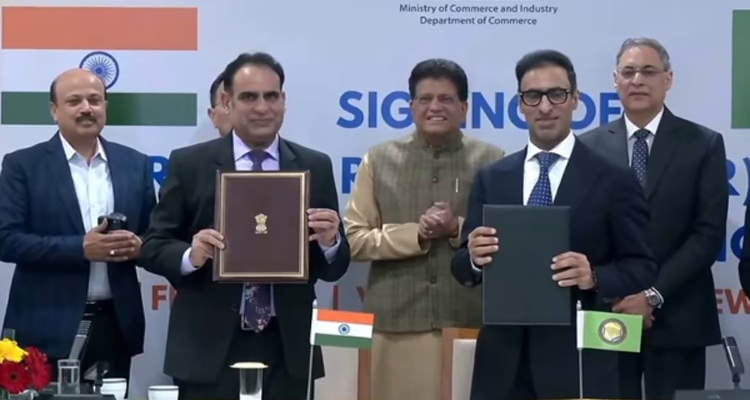
New Delhi: India and the six-nation Gulf Cooperation Council (GCC) on Thursday signed the Terms of Reference (ToR) in New Delhi, formally setting the stage for negotiations on a comprehensive Free Trade Agreement (FTA). The GCC bloc comprises Saudi Arabia, the United Arab Emirates, Bahrain, Kuwait, Oman and Qatar.
The signing outlines the framework for structured negotiations between the two sides. Union Commerce and Industry Minister Piyush Goyal described the proposed pact as “robust,” saying it would facilitate smoother movement of goods and services while strengthening investment linkages between India and the Arab grouping.
Delighted to witness the signing of the Terms of Reference for the FTA between India and the Gulf Cooperation Council (GCC) by our chief negotiators.
Under PM @NarendraModi ji’s leadership, our ties with the 6-nation GCC (Bahrain, Kuwait, Oman, Qatar, Saudi Arabia, and the… pic.twitter.com/7tPHmKSStk
— Piyush Goyal (@PiyushGoyal) February 5, 2026
Boost to India’s global economic outreach
The move signals renewed momentum in India’s push to deepen economic engagement with key partners across regions. It follows closely on the heels of UAE President Sheikh Mohamed bin Zayed Al Nahyan’s brief but high-profile visit to India, during which he met Prime Minister Narendra Modi to review bilateral cooperation across sectors. Though lasting just a few hours, the visit underlined the strategic and economic closeness between New Delhi and Abu Dhabi.
Part of wider trade diplomacy push
The development also comes amid a series of recent trade initiatives by India. Days earlier, India and the United States announced progress on a long-pending trade arrangement, with US President Donald Trump stating that tariffs on Indian goods would be reduced to 18 per cent.
Meanwhile, India has concluded negotiations on a landmark trade deal with the European Union after two decades of talks. Under the agreement, India will cut or eliminate tariffs on 96.6 per cent of EU exports. Duties on imported cars will fall sharply from 110 per cent to 10 per cent, while tariffs on auto parts will be phased out over ten years. Most levies on machinery, chemicals and pharmaceutical products are also set to be removed.
Together, these developments reflect India’s accelerating effort to expand trade partnerships and secure market access across major global blocs.