
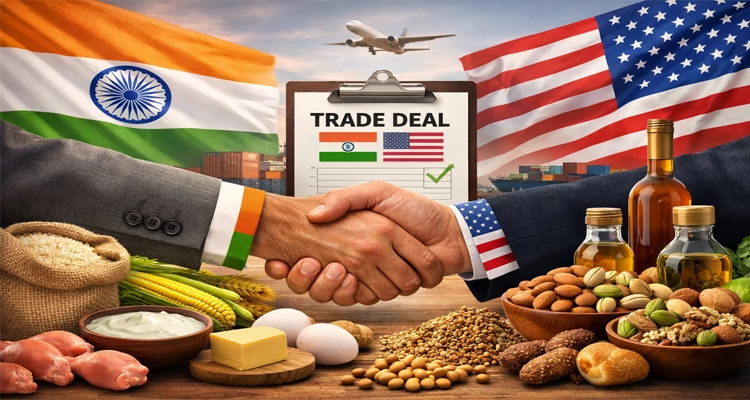
India shields agriculture and dairy sectors in its interim trade deal with the US while allowing limited market access for select imports. The framework eases tariffs and aims to balance farmer protection with export growth.

New Delhi: India has drawn firm protective lines around its agricultural and dairy sectors under the interim trade framework (India-US Trade Deal) with the United States announced on Saturday, while offering calibrated access to American products such as tree nuts, livestock feed and premium consumer goods. The approach reflects a balancing act — easing tariff tensions while safeguarding rural livelihoods.
Commerce and Industry Minister Piyush Goyal said the arrangement ensures domestic farmers remain protected even as it lowers friction in industrial trade, emphasising that sensitive agricultural and dairy items remain outside tariff concessions.
Protection for Farmers and Rural Economy
Under the framework, products including maize, wheat, rice, soy, poultry, milk and related dairy goods, ethanol, tobacco, certain vegetables and meat remain shielded from tariff reductions. The government has maintained strong protection for the dairy sector — a crucial source of income for millions of small-scale farmers — ensuring no duty relaxations on items such as milk, cheese, butter, ghee and yoghurt.
Staple grains are also insulated from concessions, preserving procurement and pricing systems. Poultry and meat imports, including products such as chicken legs, remain blocked from tariff cuts, along with other ring-fenced categories like soy and fuel ethanol. The move highlights India’s priority of preserving employment-intensive and self-sufficient farm segments.
Limited Openings for US Exports
While core staples remain protected, India has agreed to reduce tariffs in sectors seen as less sensitive or strategically beneficial. Livestock feed inputs such as dried distillers’ grains and red sorghum are expected to enter more easily, potentially lowering costs for domestic animal husbandry.
Duties are also set to ease on premium consumer imports including almonds, walnuts and pistachios, alongside certain fruits, soybean oil and high-end beverages like wine and spirits. These concessions create market opportunities for US exporters while complementing domestic supply chains.
Tariff Cuts and Export Opportunities
The interim pact comes alongside significant reductions in tariffs on Indian goods entering the US market, boosting competitiveness for several manufacturing sectors. Earlier punitive duties have already been rolled back, and additional reductions are expected to follow.
The agreement forms part of efforts to stabilise bilateral trade relations and address longstanding tariff disputes, providing a pathway toward smoother trade flows and improved export prospects.
Addressing Trade Imbalances
India’s agricultural exports to the US have traditionally been led by marine products, spices and basmati rice, while American shipments to India remain comparatively smaller. The new framework seeks to narrow this gap by expanding American access to selected high-value segments without disturbing India’s staples economy.
Beyond agriculture, India has indicated plans to scale up purchases of US goods across sectors such as energy, aviation and technology, underscoring the broader strategic dimension of the trade partnership.
Toward a Broader Agreement
Overall, the interim framework represents a calibrated compromise — allowing targeted imports that complement domestic needs while preserving protective barriers around politically and economically sensitive sectors. Officials view the arrangement as an important step toward stabilising trade ties and laying the groundwork for a comprehensive bilateral agreement in the future.