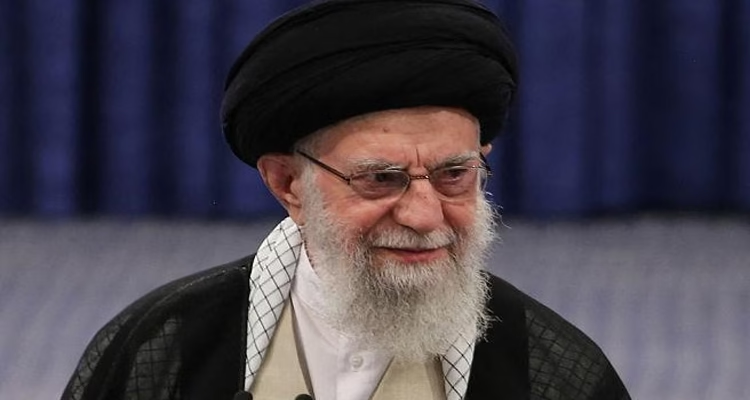
News Desk: Confusion and conflicting claims surround the fate of Iran’s Supreme Leader, Ayatollah Ali Khamenei, following large-scale joint US–Israel airstrikes on Iranian targets late Saturday.
Israeli Prime Minister Benjamin Netanyahu said there are “many signs” suggesting that Khamenei is “no longer alive” after strikes reportedly hit high-value military and leadership-linked locations in Tehran. While Netanyahu did not provide direct evidence, he indicated that the operation caused significant damage and targeted key figures within Iran’s security establishment.
The statement has triggered intense speculation across global diplomatic and media circles.
Iran Rejects Claim
Iranian officials have firmly denied the reports, stating that the Supreme Leader is alive and dismissing the Israeli remarks as psychological warfare. Government representatives insisted that the leadership structure remains intact and operational despite the attacks.
Iranian state media earlier indicated that Khamenei was expected to address the nation, though no televised appearance had been broadcast at the time of reporting.
Escalating Regional Tensions
The strikes mark one of the most dramatic escalations in recent Middle East tensions. According to military sources, multiple strategic sites were targeted in and around Tehran. In response, Iran launched retaliatory missile and drone attacks toward Israeli territory and US military installations in the region.
The rapid exchange has raised fears of a broader regional conflict, prompting urgent diplomatic consultations among major world powers.
No Independent Confirmation
As of now, there is no independent verification confirming whether Khamenei has been killed or injured. International observers note that in active conflict situations, early claims — especially from parties directly involved — often require cautious evaluation until corroborated by neutral sources.
Analysts warn that uncertainty over Khamenei’s status could significantly impact Iran’s political stability. As Supreme Leader since 1989, he holds ultimate authority over Iran’s military, judiciary and strategic policy. Any sudden leadership vacuum could trigger swift internal power consolidation or unrest.
What Happens Next?
The coming hours are expected to be critical. A public appearance, official medical statement, or confirmation from neutral international observers would likely settle the speculation.
Until then, the situation remains fluid — defined by high-stakes military escalation and an unresolved question at the top of Iran’s leadership.