News Desk: The United States’ attempt to build an international naval coalition to secure the strategic Strait of Hormuz has faced a setback after key allies — the United Kingdom, Japan and Australia — signalled reluctance to join the proposed mission.
Former US President Donald Trump, who has been pushing for stronger military coordination among allies amid rising tensions in the Middle East, had urged partner countries to deploy naval vessels to escort commercial ships passing through the crucial waterway. The move was aimed at protecting global energy shipments and ensuring the safety of oil tankers amid fears of disruptions linked to the ongoing Iran-related crisis.
❗️ Trump: ‘Many Countries in Conjunction with US to Send War Ships to Strait of Hormuz to Keep it Open & Safe’
Trump said he hoped ‘China, France, Japan, South Korea and the UK will send ships to the area.’ pic.twitter.com/soUzIcfhmn
— RT_India (@RT_India_news) March 14, 2026
However, several major US allies have so far declined to commit their naval forces to the plan, reflecting growing caution about being drawn into a potentially wider conflict in the region.
US allies cautious on Trump’s call for warships in Hormuz Strait
Australia and Japan decline naval deployments@AadhyaJunejaa has more pic.twitter.com/G9G3rmaKl4
— WION (@WIONews) March 16, 2026
UK Maintains Cautious Approach
The United Kingdom has reportedly taken a cautious stance on the proposed naval coalition. British officials are said to prefer diplomatic engagement and coordination with European partners before committing military assets to a mission that could escalate tensions in the Gulf region.
London is believed to be closely monitoring developments in the Strait of Hormuz while assessing the broader geopolitical and security implications of joining a US-led maritime escort operation.
Japan Weighs Constitutional and Strategic Concerns
Japan, which depends heavily on Middle Eastern oil supplies, has also indicated that it has no immediate plans to dispatch naval vessels to the Strait of Hormuz.
Tokyo’s hesitation is linked to constitutional and political constraints governing overseas military operations. Japan’s pacifist constitution places strict limits on the deployment of military forces abroad, making participation in a combat-related maritime mission a sensitive issue domestically.
Instead, Japanese authorities are focusing on monitoring the situation and preparing contingency measures to safeguard energy security.
Australia Declines Warship Deployment
Australia has similarly ruled out sending warships to join the proposed coalition. Officials in Canberra have emphasised that the country is prioritising regional security commitments and is cautious about becoming directly involved in a new military mission in the Gulf.
While Australia remains aligned with the United States on strategic issues, the government has indicated that it will continue assessing the evolving situation before considering any further security steps.
China Calls for Stability and Dialogue
China has not supported the idea of a US-led naval coalition in the Strait of Hormuz. Instead, Beijing has urged restraint and called for diplomatic efforts to ensure the safety of commercial shipping and maintain stability in the region.
Chinese officials have emphasised the importance of avoiding further escalation and have encouraged dialogue among regional stakeholders to keep the vital maritime route open.
As one of the world’s largest energy importers, China relies significantly on oil and gas shipments passing through the Strait of Hormuz, making uninterrupted navigation through the corridor crucial for its energy security.
Global Energy Route Under Pressure
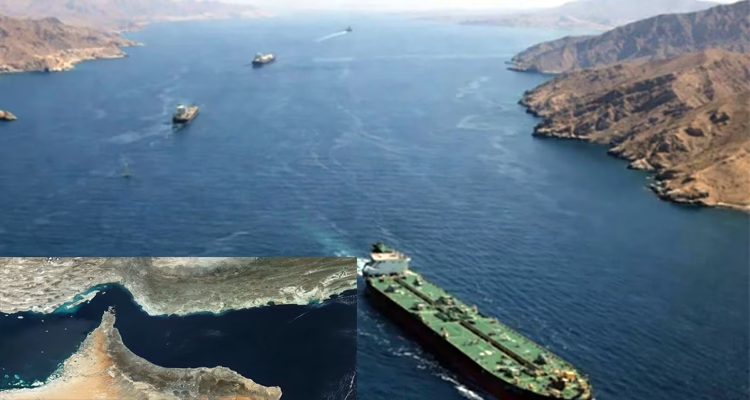
The Strait of Hormuz remains one of the world’s most critical maritime chokepoints, with a significant share of global oil and liquefied natural gas shipments passing through the narrow waterway connecting the Persian Gulf to the Arabian Sea.
With tensions in the region already high, the reluctance of major US allies to join a naval coalition highlights the complex geopolitical calculations surrounding the crisis. Analysts warn that any disruption to shipping through the strait could have immediate consequences for global energy markets and international trade.
For now, Washington continues to press its allies to share the responsibility of securing the vital energy corridor, even as several partners prefer a more cautious and diplomatic approach to the unfolding crisis.