As tensions intensify in West Asia—with Israel and the United States escalating pressure on Iran, and Tehran responding with counter-strikes across the region—global reactions have ranged from concern to condemnation. Several countries have criticised Iran’s attacks, particularly those targeting energy infrastructure in the Gulf.
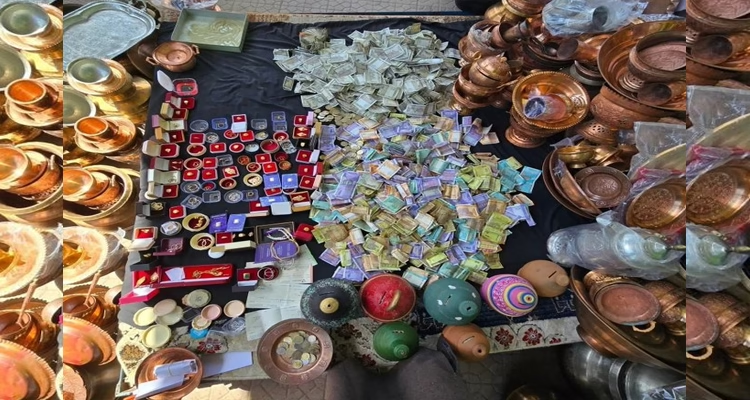
Amid this volatile geopolitical backdrop, a humanitarian gesture from India’s Kashmir Valley has drawn attention. Sections of the Muslim population in the region—particularly Shia Muslim communities—have launched a donation drive for civilians affected in Iran, contributing gold, cash, jewellery, and even household utensils.
Eid Aftermath Sparks Community Mobilisation
The initiative gathered pace in the days following Eid-ul-Fitr, with collection centres emerging across Srinagar, Budgam, and Baramulla. Volunteers set up donation desks outside mosques and carried out door-to-door outreach, encouraging residents to contribute whatever they could.
The response has been deeply emotional. Women donated gold ornaments and family valuables, while children contributed their savings and festive “Eidi” money—turning the drive into a powerful symbol of community empathy.
Even Kashmiri children are offering their piggy banks as gifts to Iran.
God bless you. pic.twitter.com/OfI6w4rNUb— Iran in India (@Iran_in_India) March 22, 2026
Gold, Cash, and Utensils: Scale of Contributions
The range and scale of donations reflect a broad-based effort. Contributions reported from various areas include:
- Gold and silver jewellery
- Cash donations
- Copper utensils and household items
- Personal savings and belongings
In one widely shared instance, a widow reportedly donated gold she had preserved for decades—highlighting the emotional depth behind the campaign.
With hearts full of gratitude, we sincerely thank the kind people of Kashmir for standing with the people of Iran through their humanitarian support and heartfelt solidarity; this kindness will never be forgotten.
Thank you, India. https://t.co/6rEyYEfjHu— Iran in India (@Iran_in_India) March 22, 2026
Voices from the Ground
Commenting on the initiative, Aga Mujtaba described the drive as a humanitarian expression of solidarity with the people of Iran. In remarks to Economic Times, he said that while the community had earlier voiced protest against actions by Israel and the United States, the current effort reflects a shift toward tangible support, with people contributing in whatever way they can.
He further explained that donations are either being sent directly to accounts designated by the Embassy of Iran in India or pooled and transferred by organisers on behalf of donors. The participation has been widespread, with even children stepping forward to contribute their savings and pocket money, underscoring the emotional depth of the campaign.
Religious Affinity and Humanitarian Concern
Organisers say the campaign is driven by a mix of humanitarian concern and religious connection, particularly among Shia Muslims who share cultural and spiritual ties with Iran. Many participants cited the ongoing conflict involving Iran, Israel, and the United States as a key motivator for stepping forward with support.
Historic Ties with Iran
Beyond immediate humanitarian impulses, Kashmir’s longstanding historical and cultural links with Iran also underpin the sentiment. For centuries, Persian influence has shaped the Valley’s language, art, architecture, and Islamic scholarship. Such deep-rooted connections earned Kashmir the poetic description of “Iran-e-Sagheer” (Little Iran), reflecting a shared civilisational and cultural heritage across regions.
Iran Responds with Gratitude
The Embassy of Iran in India acknowledged the gesture, expressing heartfelt gratitude in a message posted on X:
“With hearts full of gratitude, we sincerely thank the kind people of Kashmir for standing with the people of Iran through their humanitarian support and heartfelt solidarity… this kindness will never be forgotten.”
Images circulating online show piles of collected jewellery, bundles of cash, and utensils—underscoring the scale of the grassroots mobilisation.
We will never forget your kindness and humanity.
Thank you, India. https://t.co/hiYnIEfN3D— Iran in India (@Iran_in_India) March 22, 2026
Not a Universal Movement
While often broadly attributed to “Kashmiris,” the campaign is primarily driven by sections of the Muslim population in the Kashmir Valley, with notable participation from Shia communities. It does not represent all religious groups in the region.
Local youth volunteers, religious leaders, and community networks have played a central role in organising and sustaining the effort, transforming it into a structured relief initiative.