
Dr. Vinod Chandrashekhar Dixit
Safe Motherhood Day highlights maternal health in India. Learn about risks, government schemes, and how safe motherhood can break the cycle of poverty.

National Safe Motherhood Day, an initiative of the White Ribbon Alliance, is observed on April 11 every year. The day coincides with the birth anniversary of Kasturba Gandhi, the wife of Mahatma Gandhi. The Government of India declared this observance in 2003 to raise awareness about the importance of safe motherhood practices.
India remains one of the highest-risk places in the world for childbirth, accounting for nearly 15% of total maternal deaths globally. This day emphasizes reducing anaemia among women, promoting institutional deliveries, and ensuring better prenatal and postnatal healthcare—critical components for maternal well-being.
A healthy mother is vital, as she nurtures her unborn child. Adequate nutrition during pregnancy supports proper brain development of the foetus, reduces birth defects, and ensures healthy birth weight. However, every year, approximately 44,000 women in India die due to inadequate care during pregnancy and childbirth.
Motherhood is a precious gift, and mothers hold a special place in our lives. Women possess the unique ability to nurture life for nine months, enduring immense physical and emotional challenges in the process.
The consequences of neglecting safe motherhood practices are severe. Maternal mortality continues to be a major public health concern in India, with preventable causes such as postpartum haemorrhage, eclampsia, and obstructed labour claiming many lives. Additionally, countless women suffer long-term complications, including fistula, infertility, and chronic illnesses.
The impact extends beyond the mother—it affects entire families, especially newborns. Children who lose their mothers are more vulnerable to health and developmental challenges, perpetuating a cycle of poverty and poor health.
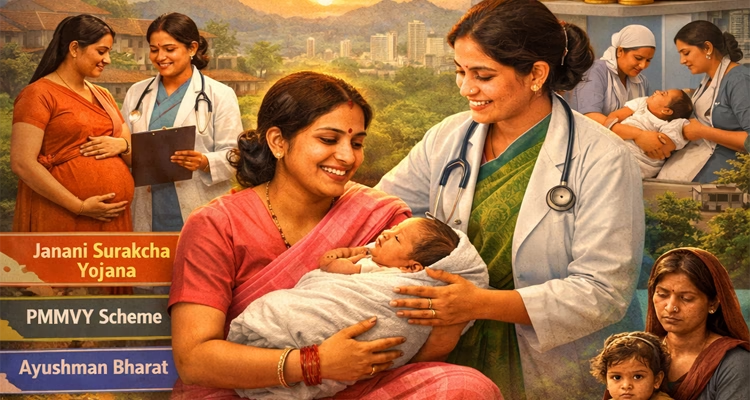
To combat these challenges, the Government of India has introduced several key initiatives:
- Janani Suraksha Yojana (JSY), which provides financial assistance to encourage institutional deliveries
- Pradhan Mantri Matru Vandana Yojana (PMMVY), offering cash incentives for nutrition and healthcare
- Ayushman Bharat, aimed at providing healthcare coverage to vulnerable populations, including pregnant women
Safe motherhood involves several essential components:
- Access to quality healthcare during pregnancy and childbirth
- Proper nutrition and prevention of anaemia
- Institutional deliveries with skilled birth attendants
- Adequate postnatal care and support
- Awareness of pregnancy-related risks and complications
- Family planning and reproductive rights
- Addressing social determinants such as poverty, education, and women’s empowerment
Empowering women through education and economic opportunities significantly improves maternal health outcomes. Community and family engagement in safe motherhood initiatives is equally important. Strengthening healthcare infrastructure and addressing cultural and social barriers to healthcare access are critical steps toward reducing maternal mortality.
Let us raise awareness about safe motherhood, prevent child marriages, and ensure that every woman receives proper nutrition and quality healthcare during and after pregnancy.
Every woman deserves dignity, respect, and care during motherhood. By working together, we can reduce maternal mortality and build a healthier, more equitable society.
The statistics are stark: India accounts for nearly 15% of global maternal deaths; around 44,000 women die annually due to pregnancy-related complications; approximately 67% of Indian women suffer from anaemia; and only about 52% of deliveries take place in healthcare institutions.
Achieving safe motherhood requires prioritizing access to quality healthcare, nutrition, institutional delivery, postnatal care, family planning, and addressing broader social determinants.