 Dr. Vinod Chandrashekhar Dixit
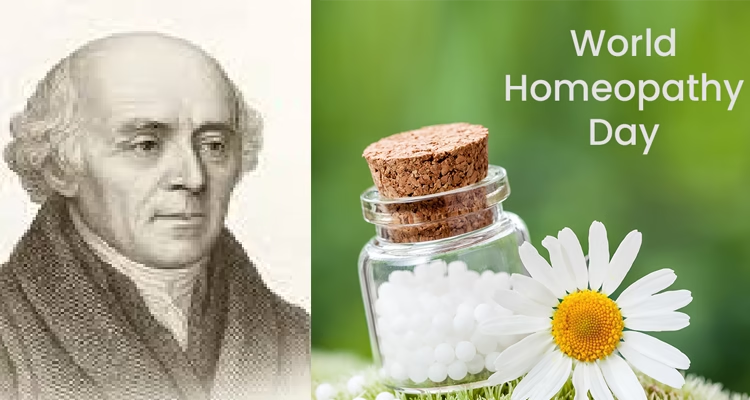
World Homeopathy Day is celebrated every year on April 10. Homeopathy is one of the most popular systems of medicine in India. This day is observed to honor the birth anniversary of Samuel Hahnemann, the founder of the homeopathic system of medicine. He was a German physician, an acclaimed scientist, a great scholar, and a linguist. He discovered a method of healing through homeopathy and passed away on July 2, 1843.
Homeopathy is an alternative system of medicine in which extremely diluted amounts of natural substances are used to treat various ailments. The system was developed by Dr. Hahnemann through extensive experimentation, including self-experimentation. While studying the effects of cinchona bark, he observed that it could induce malaria-like symptoms in a healthy person. From this observation, he developed the principle of “like cures like,” which became the foundation of homeopathy.
Homeopathy is a recognized system of medicine in India under the Homoeopathy Central Council Act, 1973 and is considered one of the national systems of medicine. The remedies used in homeopathy are derived from plant, animal, and mineral sources. Common ingredients include herbs, activated charcoal, vinegar, garlic, caffeine, and stinging nettle. These substances are processed and prepared in the form of tablets, ointments, gels, and liquid drops.
Homeopathic practitioners aim to treat the individual as a whole, considering personality, lifestyle, hereditary factors, and medical history. One of the key principles of homeopathy is individualization. Even if two people suffer from the same disease, they may receive entirely different treatments based on their unique symptoms and bodily responses.
Homeopathy is often used for a wide range of conditions such as colds, flu, allergies, arthritis, and sprains. It emphasizes “constitutional treatment,” where remedies are selected based on the totality of a patient’s symptoms. This approach requires careful evaluation and consultation with a qualified homeopath.
It is important to note that homeopathic medicines do not work on the same principles as vaccines or conventional medicines. They are not a substitute for vaccinations or scientifically proven treatments. The effectiveness of homeopathy remains a subject of debate within the medical community. Therefore, patients should never discontinue conventional treatment without consulting a qualified medical professional.
Homeopathy is based on the principle of treating “like with like” and aims to stimulate the body’s natural healing response. While it continues to be widely practiced and valued by many, informed and balanced medical decisions remain essential.