
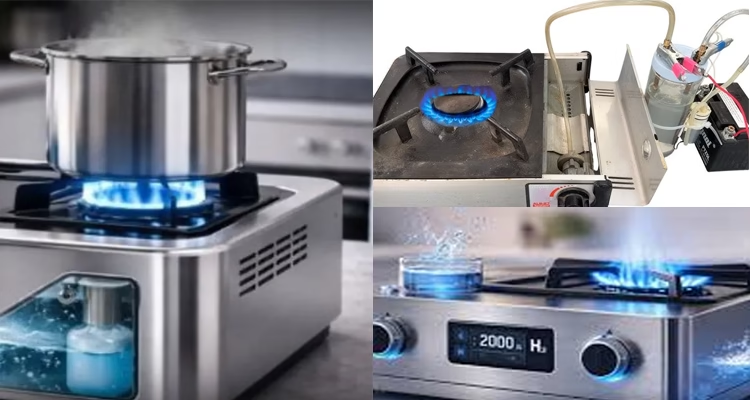
Stove Runs on Water: A Game-Changer for Domestic Fuel Systems
In a breakthrough that could reshape how households cook, a hydrogen-powered stove—capable of running on water and electricity—is emerging as a serious contender to replace conventional LPG. Still in its early phase, the technology is already being seen as a potential game-changer for future domestic fuel systems.
Turning Water into Cooking Fuel
At the heart of the stove is a compact electrolyser that splits water into hydrogen and oxygen using electricity. The process happens instantly within the unit, eliminating the need for fuel storage.
The hydrogen stove technology is no longer just a concept—it has already been successfully demonstrated in India. Notably, a Made-in-India hydrogen cooking system has been developed by clean-tech startup Greenvize, which has showcased a working prototype capable of generating hydrogen fuel on demand using water and electricity. The system integrates a compact electrolyser within the stove unit, allowing real-time conversion of water into hydrogen without the need for storage or external fuel supply. Demonstrations conducted by the company have highlighted its practical usability in real kitchen conditions, including stable flame control, compatibility with standard utensils, and safe operation. This development positions India among the early adopters of hydrogen-based domestic cooking solutions and reflects the country’s growing push toward indigenous clean energy innovation. Experts believe that such homegrown technologies could accelerate the transition toward sustainable kitchens, especially if supported by policy incentives and cost reductions in the coming years.