
Prof. (Dr.) Manmohan Prakash
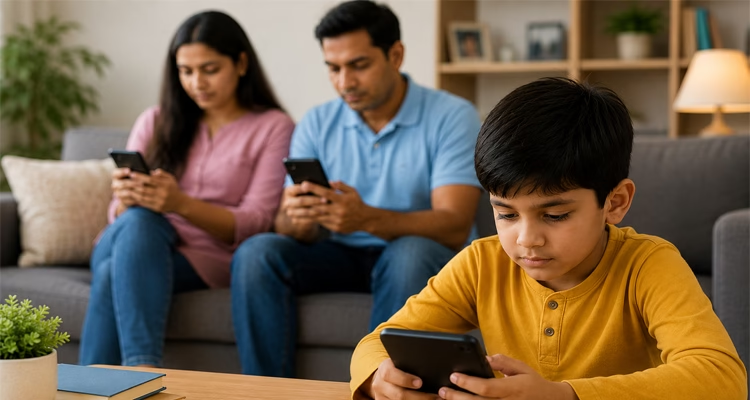
Modern society is increasingly driven by individual freedom and economic competition. As a result, joint family systems are gradually being replaced by digital screens and daycare centres. Children today are spending more time with gadgets than with family members.
Changing Nature of Parenting
The relationship between parents and children is not merely biological; it is a living bond built on love, trust, care, and guidance. In Indian culture, parents are regarded as a child’s first teachers. They not only teach children how to walk and speak but also instill moral values, discipline, and social responsibility.
A healthy family environment is one where children receive affection, communication, emotional support, and quality time from their loved ones. However, modern lifestyles, career pressures, and increasing dependence on technology have transformed family relationships. Today, many parents struggle to find enough time for their children. To compensate, they often hand over mobile phones, tablets, or televisions so they themselves can remain “free” or occupied with other responsibilities.
Mobile Phones Becoming the “Easy Solution”
The situation has reached a point where if a child cries, throws tantrums, or refuses to eat, the immediate solution is to place a mobile phone in the child’s hands. This is not merely the use of technology; it reflects a changing parenting mindset.
Modern society is increasingly driven by individual freedom and economic competition. As a result, joint family systems are gradually being replaced by digital screens and daycare centres. Children today are spending more time with gadgets than with family members.
Harmful Effects of Excessive Screen Time
According to psychologists and the World Health Organization, excessive screen time has serious negative effects on the physical, mental, and emotional development of children. It weakens concentration and memory, delays language development, and increases irritability and emotional instability.
Childhood, once filled with outdoor games, storytelling, and interaction with nature, is now becoming confined to screens. Children are drifting away from playgrounds and family companionship and are becoming increasingly isolated in the virtual world.
On the physical level too, problems such as weak eyesight, obesity, lack of physical activity, and sleep disorders are rising at an early age. Unrestricted internet exposure and addiction to violent games are also pushing many children toward stress, anxiety, and depression.
Parenting Beyond Material Comforts
Parenting does not simply mean providing children with modern facilities or expensive gadgets. True parenting involves understanding the emotional world of children and nurturing them with care, patience, and attention.
Meaningful conversations with parents create confidence, security, and emotional strength in children. Emotional bonding within the family helps children develop better social behaviour and moral values.
Encouraging Healthy Alternatives
There is an urgent need to change our perspective. Instead of connecting children only with gadgets, parents should encourage them toward books, sports, gardening, yoga, storytelling, and other creative activities.
Eating meals together as a family and spending time with grandparents and elders can play a major role in shaping a child’s personality and values. Such habits strengthen emotional bonds and help children remain socially and mentally healthy.
Love and Time Matter More Than Gadgets
Technology can certainly be beneficial for education and learning, but it can never replace the warmth, affection, and presence of parents. If we invest our time, love, and values in children today, they will grow into responsible and compassionate citizens tomorrow.
In reality, children do not need expensive gadgets as much as they need the companionship, attention, and unconditional love of their parents.