PM Modi Calls for ‘National Economic Discipline’ at Hyderabad Rally, Urges Citizens to Cut Imports and Fuel Consumption
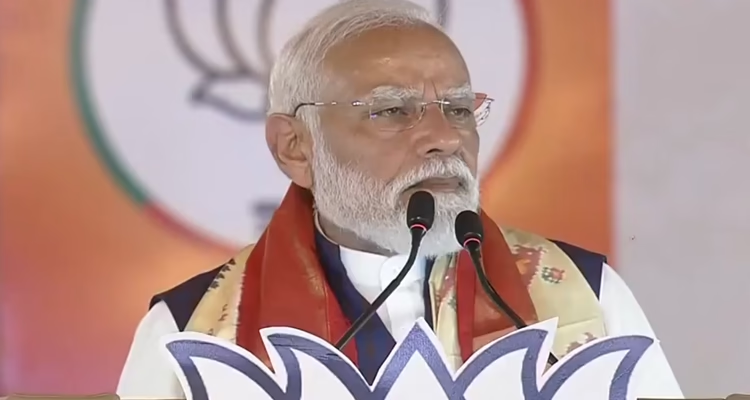
Hyderabad: Prime Minister Narendra Modi made a sweeping appeal for economic self-reliance, sustainable living and reduced import dependency while addressing a massive public gathering in Hyderabad. Framing the moment as a “time of crisis,” Modi urged citizens to adopt lifestyle changes that could strengthen India’s economy and conserve foreign exchange reserves.
The Prime Minister’s speech focused on reducing luxury imports, cutting fuel consumption, promoting local products and encouraging sustainable agricultural practices.
Indian PM Narendra Modi urged citizens to adopt sustainable and self-reliant habits, saying India’s rapid progress must be matched by collective efforts to overcome economic and environmental challenges.
Key appeals made by the Prime Minister:
+ Prioritise work from home… pic.twitter.com/D08a3jTx32
— WION (@WIONews) May 10, 2026
‘Do Not Buy Gold for One Year’
In one of his strongest appeals, PM Modi urged people to avoid purchasing gold for weddings and ceremonies for at least one year, saying India spends huge amounts of foreign exchange on gold imports annually.
“I would appeal to people not to buy gold for weddings for one year,” Modi told the gathering, stressing the need for economic restraint and national responsibility.
‘We Do Not Have Big-Big Oil Wells’
Highlighting India’s dependence on imported crude oil, the Prime Minister reminded citizens that the country lacks massive natural oil reserves and therefore must reduce fuel consumption wherever possible.
“Our country do not have big-big oil wells,” he remarked while calling for responsible energy usage.
Appeal to Reduce Petrol and Diesel Consumption
PM Modi encouraged people to rely more on metro rail systems and public transport to reduce petrol and diesel consumption.
“Reduce petrol and diesel consumption by using metros. It will save foreign exchange,” he said.
The Prime Minister also appealed for greater use of electric vehicles and shared transport systems.
“If we must use a car, then we should try to carpool. Use Electric Vehicles,” he added.
‘Prioritise Work From Home’
In a push to reduce urban traffic, fuel usage and pollution, Modi urged companies and employees to prioritise Work From Home wherever feasible.
He said remote working could significantly reduce fuel consumption and ease pressure on city infrastructure.
PM Modi Urges Citizens to Postpone Foreign Travel
The Prime Minister also appealed to citizens to postpone non-essential foreign travel for at least a year and instead spend within the country to strengthen the domestic economy and tourism sector.
“Postpone travelling abroad for at least a year,” he urged.
Call for Healthier and Economical Food Habits
Modi appealed to people to reduce edible oil consumption, linking it both to personal health and economic savings.
“Reduce edible oil consumption for both economic health and personal health,” he said, noting India’s heavy dependence on imported edible oils.
Push for Sustainable Farming Practices
Addressing farmers, the Prime Minister called for a 50 per cent reduction in the use of chemical fertilisers and encouraged the adoption of sustainable agricultural methods.
He also advocated the use of solar-powered irrigation pumps instead of diesel-operated pumps in agriculture to reduce fuel dependency and promote renewable energy in villages.
‘Prioritise Made-in-India Products’
Reiterating the Centre’s self-reliance push, Modi urged citizens to support indigenous manufacturing and local businesses.
“Prioritise Made-in-India and locally manufactured products,” he said, adding that every purchase made by citizens could contribute to employment generation and economic growth.
Massive Turnout at Hyderabad Event
The Hyderabad rally witnessed a huge turnout and extensive security arrangements, with BJP leaders projecting the event as a major outreach programme centred on economic nationalism, sustainability and self-reliance.
The Prime Minister described the movement as a collective national effort to secure India’s long-term economic future through responsible consumption and domestic production.
|
|