
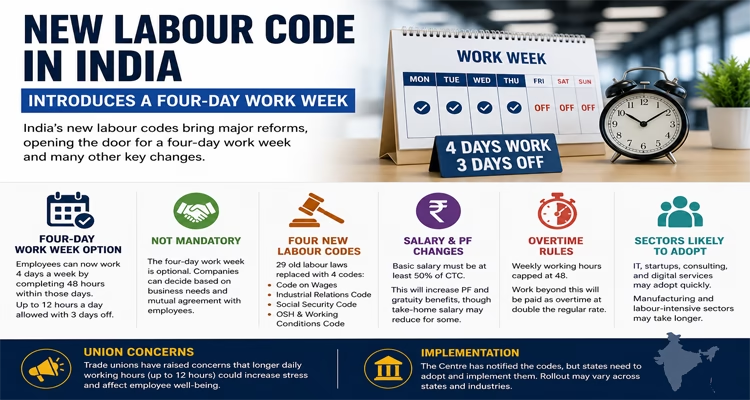
New Labour Code Opens Door for 4-Day Work Week in India
India’s new labour code introduces the option of a 4-day work week, revised salary structures, PF changes, overtime rules and major workplace reforms across sectors.

Major Shift in India’s Workplace Culture
India is preparing for a major transformation in workplace practices as the new labour codes pave the way for a four-day work week across several sectors. The reform is part of the Centre’s ambitious overhaul of labour laws aimed at modernising employment regulations, increasing flexibility, and simplifying compliance for businesses.
The new framework allows employees to work only four days a week while completing the mandatory 48 working hours within those days. Workers opting for this model may have to work up to 12 hours daily in exchange for three weekly offs.
Four-Day Week Not Mandatory
The government has clarified that the four-day work week will not be compulsory for all organisations. Companies will have the flexibility to choose whether to implement the model depending on operational requirements and mutual agreement with employees.
Employees can continue with the traditional five-day or six-day work schedule if organisations decide not to adopt the compressed work structure.
Four Labour Codes Replace 29 Old Laws
The labour reforms consolidate 29 existing labour laws into four broad codes:
- Code on Wages
- Industrial Relations Code
- Social Security Code
- Occupational Safety, Health and Working Conditions Code
The Centre says the new system is designed to improve ease of doing business while strengthening social security and worker protections.
Changes in Salary Structure and PF
One of the biggest changes under the new labour codes relates to salary structure. The rules mandate that basic salary must account for at least 50 percent of an employee’s total cost-to-company (CTC).
This is expected to increase provident fund (PF) and gratuity contributions, giving employees better long-term retirement benefits. However, for many workers, the revised structure could reduce monthly take-home salaries.
Overtime Rules Tightened
The new labour framework also puts stricter limits on working hours. Total weekly work duration cannot exceed 48 hours, and any work beyond the prescribed limit will qualify for overtime payment.
Employees working overtime will be entitled to double wages under the revised rules.
New Labour Codes Notified, But..
No criteria for minimum wage yet
Centre says it will be notified separately after talks with states@R_Dhanrajani reports #labourrights pic.twitter.com/HM966jzjuc
— CNBC-TV18 (@CNBCTV18News) May 11, 2026
IT and Startup Sectors Likely to Benefit Most
Experts believe sectors such as information technology, startups, consulting, digital services, and remote-work industries are most likely to adopt the four-day work model quickly.
Industries dependent on physical operations and continuous production, including manufacturing and heavy industries, may take longer to shift because of operational challenges.
Trade Unions Raise Concerns
While industry groups have welcomed the labour reforms as progressive and business-friendly, several trade unions have criticised the move.
Unions argue that extending daily working hours to 12 hours could increase stress, fatigue, and pressure on employees despite the additional weekly off.
State-Level Implementation Crucial
Although the Centre has notified the labour codes, implementation will depend heavily on states adopting and enforcing the rules. Since labour is a subject under the Concurrent List, different states may roll out the reforms at different speeds.
The phased implementation means the impact of the four-day work week may vary across industries and regions in the coming months.