Global Oil Route Under Threat as Regional Tensions Explode
Tehran/Jerusalem: The Middle East edged closer to a major regional crisis on Saturday after Iran announced the closure of the strategic Strait of Hormuz, one of the world’s most critical oil chokepoints, following a deadly Israeli strike in Lebanon that reportedly killed 16 people.
The dramatic move has sent shockwaves through global energy markets and intensified fears of a wider confrontation involving Iran, Israel, Hezbollah, and potentially other regional powers.
Iran condemned the Israeli attack as a “dangerous escalation” and warned that continued military action in Lebanon would not go unanswered. In response, Tehran declared that maritime traffic through the Strait of Hormuz would face restrictions, raising concerns over disruptions to global oil and gas supplies.
🚨🇮🇷 Iran shuts Strait of Hormuz again
Ordered by Iran’s Central Headquarters of Khatam al-Anbiya, the closure responds to:
🔸US breaches of the ceasefire
🔸Israel’s continued operations in southern Lebanon
Iran calls it only the “first step.”
pic.twitter.com/hRGCNfkb4q— Sputnik India (@Sputnik_India) June 20, 2026
World’s Energy Lifeline at Risk
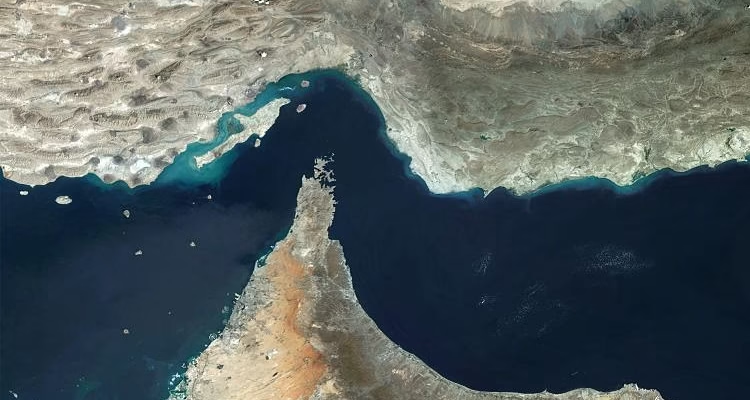
The Strait of Hormuz is far more than a narrow waterway. Nearly a fifth of the world’s oil trade passes through the strategic passage connecting the Persian Gulf with international markets. Any threat to shipping in the region immediately reverberates across global energy markets.
Analysts warn that even a temporary disruption could trigger a sharp rise in crude oil prices, increase shipping costs and add fresh pressure to inflation-hit economies worldwide.
Lebanon Strike Sparks Fresh Crisis
The latest tensions erupted after Israeli forces carried out strikes in southern Lebanon, targeting what Israel described as militant infrastructure. Lebanese sources reported at least 16 fatalities, reigniting fears that the conflict between Israel and Hezbollah could spiral into a broader regional war.
Iran, Hezbollah’s principal backer, accused Israel of undermining efforts to stabilize the region and vowed that the attack would have consequences.
Tehran Raises the Stakes
Iran’s announcement marks one of its strongest responses since tensions with Israel surged in recent months. By targeting the Strait of Hormuz—a route vital to global energy security—Tehran has signaled its willingness to use economic pressure alongside political and military deterrence.
The move has prompted heightened alert levels among naval forces operating in the Gulf, while major oil-importing nations are closely monitoring developments.
Global Powers Watch Closely
Governments across Europe, Asia and North America are scrambling to assess the implications of the latest escalation. Energy traders, shipping companies and financial markets are bracing for potential volatility as uncertainty grips one of the world’s most strategically important regions.
Diplomatic channels remain active, with international mediators urging restraint and calling on all sides to avoid actions that could trigger a wider conflict.
What Happens Next?
The immediate question is whether Iran’s closure announcement will translate into a sustained disruption of shipping traffic or remain a political warning aimed at deterring further Israeli military action.
Either way, the message from Tehran is unmistakable: the conflict is no longer confined to battlefields in Lebanon. It now threatens a global energy artery whose stability affects economies around the world.
As tensions continue to mount, the Strait of Hormuz has once again become the focal point of a geopolitical showdown with consequences far beyond the Middle East.