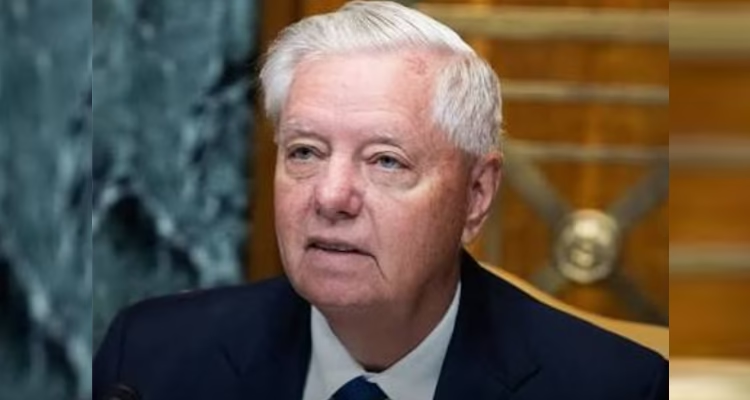
Washington: U.S. Senator Lindsey Graham, the Republican lawmaker who championed a proposal to impose 500% tariffs on countries such as India and China for continuing to buy Russian oil, has died at the age of 71 after a sudden medical emergency. His death has sparked widespread reactions across the political spectrum and fueled unverified conspiracy theories online, with speculation ranging from Russian involvement to claims linked to Iran. However, there is no credible evidence or official finding to support allegations that Graham was poisoned.
A four-term senator from South Carolina and one of President Donald Trump’s closest foreign policy allies, Graham was among the Senate’s most influential voices on national security, Russia, Iran and Ukraine. His death comes as lawmakers continue debating tougher sanctions aimed at increasing economic pressure on Moscow.
The Senator Behind the 500% Tariff Proposal
Graham was the principal sponsor of the bipartisan Sanctioning Russia Act, legislation designed to authorize the U.S. President to impose tariffs of up to 500% on imports from countries that continue purchasing Russian oil, natural gas, petroleum products or uranium if Russia failed to negotiate peace over the Ukraine conflict.
The proposal directly affected major buyers of Russian energy, including India, China and Brazil, and drew significant attention in New Delhi because of its potential implications for India-U.S. trade ties. Graham repeatedly argued that continued purchases of Russian energy helped finance Moscow’s war in Ukraine and urged Washington to use economic pressure against countries maintaining such imports.
Death Triggers Online Speculation
Soon after news of Graham’s death emerged, social media platforms were flooded with speculation suggesting that he may have been poisoned because of his hardline positions on Russia, Iran and international sanctions.
According to reports available so far, Graham suffered an apparent cardiac arrest following a brief illness. U.S. authorities have not announced any evidence of foul play, nor have they indicated that poisoning is being investigated as the cause of death. No official autopsy findings released to date support such claims.
Iranian Reaction and Online Narratives Amplify Conspiracy Claims
Alongside speculation involving Russia, a separate wave of online narratives has focused on Iran, reflecting Graham’s long-standing reputation as one of Washington’s most outspoken critics of Tehran.
For decades, Graham advocated tougher sanctions against Iran, supported dismantling its ballistic missile and nuclear programmes, and strongly backed the Trump administration’s military strikes on Iranian nuclear facilities. Because of these positions, his death quickly became the subject of commentary across Iranian media and social media.
Iranian state television reportedly announced Graham’s death in celebratory terms, describing him as a “warmongering and anti-Iranian U.S. senator” and welcoming news of his passing. The coverage was widely circulated online, further fueling conspiracy theories about the circumstances surrounding his death.
However, such reactions do not constitute evidence of involvement in Graham’s death. While Iranian media coverage has amplified online speculation, no official investigation, intelligence agency or law enforcement authority has linked Iran—or any other country—to the senator’s death.
No Evidence Supports Poisoning Claims
Despite intense speculation across social media and some online forums, there is currently no verified evidence that Lindsey Graham was poisoned.
Neither U.S. medical authorities nor law enforcement agencies have reported findings suggesting poisoning or any other criminal act. At present, the available information points to a sudden medical emergency, and all claims of assassination or poisoning remain unsubstantiated.
A Hawkish Legacy
Graham served in the U.S. Senate since 2003 and became one of the Republican Party’s most influential foreign policy voices. He consistently advocated stronger military support for U.S. allies, harsher sanctions on Russia and Iran, increased defence spending, and an assertive American role in global security affairs.
Although initially a critic of Donald Trump during the 2016 presidential campaign, Graham later emerged as one of Trump’s closest allies and played a key role in shaping Republican foreign policy.
What His Death Means
Graham’s passing leaves uncertainty over the future of the Russia sanctions legislation that he had championed. While the proposal continues to enjoy significant bipartisan support, Congress has lost its most prominent advocate for the measure.
For India, his death comes amid continued scrutiny of U.S. proposals targeting countries importing Russian energy. Whether the tariff legislation advances in its current form will now depend on the political will of other lawmakers.
Fact Check
Claims that Lindsey Graham was poisoned remain unverified. Although his death has generated extensive online speculation and politically charged reactions—including from Iranian state media—no official evidence has been presented to support allegations of poisoning or foreign involvement. Until investigators or medical authorities conclude otherwise, such claims should be treated as speculation rather than established fact.