
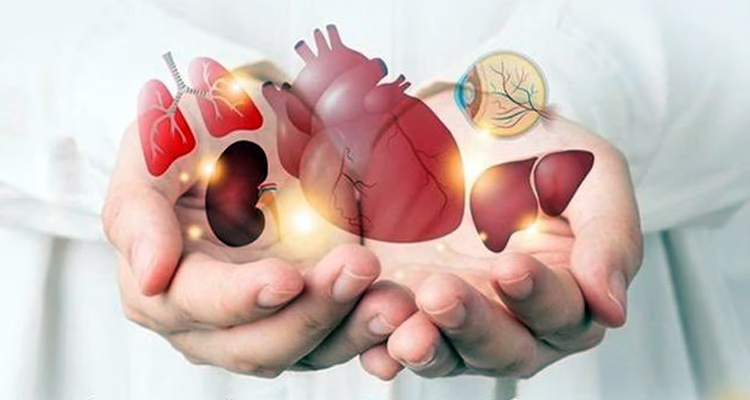
New Delhi: India has crossed a significant milestone in its organ donation movement, recording more than five lakh Aadhaar-verified organ donation pledges within three years of launching the national digital pledge portal, while consolidating its position as the world’s third-largest country in terms of total organ transplants.
The achievement was highlighted on Monday at the 16th Indian Organ Donation Day celebrations in New Delhi, where Union Minister of State for Health and Family Welfare Anupriya Patel said the country had made remarkable progress in organ donation and transplantation over the past decade.
Union Minister of State for Health and Family Welfare Smt. Anupriya Patel Calls for Strengthening Organ Donation Movement as India Observes 16th Indian Organ Donation Day
Organ Donation is the Highest Expression of Compassion, Offering a Second Chance at Life:… pic.twitter.com/nqPe4d9qcT
— Ministry of Health (@MoHFW_INDIA) August 3, 2026
According to the latest National Organ and Tissue Transplant Organisation (NOTTO) Annual Report 2025-26, India performed a record 20,138 organ transplants in 2025 — the highest ever in a single year. This represents a 6.5 per cent rise from 18,911 transplants performed in 2024.
The growth becomes even more striking when compared with the longer-term trend. India performed only 4,990 organ transplants in 2013, meaning the annual number has increased more than fourfold in just over a decade. India now stands third globally in total organ transplants, behind the United States and China, while remaining a global leader in living-donor transplantation.
Deceased-Donor Transplants Also Rise
One of the encouraging developments has been the increase in transplants involving deceased donors. According to NOTTO data, 3,526 deceased-donor organ transplants were carried out in 2025, compared with just 837 in 2013.
During 2025 alone, more than 2.58 lakh people pledged to donate their organs and tissues, reflecting growing public awareness. The cumulative number of Aadhaar-verified pledges has now crossed the five-lakh mark since the digital pledge portal was introduced in 2023.
The Aadhaar-enabled digital system has made it easier for citizens to formally record their willingness to donate organs and tissues. The initiative forms part of the government’s wider effort to create a more transparent, accessible and nationally coordinated organ donation ecosystem.
Despite the impressive rise in transplant numbers, however, the gap between patients requiring organs and the availability of suitable donors remains substantial. The government is therefore putting greater emphasis on deceased-organ donation, which can potentially save several lives through a single donor.
‘Jug Jug Jiyo’ Campaign Launched
Marking Indian Organ Donation Day, Patel launched the ‘Jug Jug Jiyo’ campaign, a year-long national initiative aimed at promoting organ donation and honouring donors and their families.
The government hopes the campaign will encourage more people to come forward, discuss organ donation with their families and help remove myths and misconceptions surrounding deceased-organ donation.
केंद्रीय स्वास्थ्य और परिवार कल्याण राज्य मंत्री अनुप्रिया पटेल ने नई दिल्ली में “16वें भारतीय अंगदान दिवस” समारोह में हिस्सा लिया । कहा, #भारत ने वर्ष 2023 में डिजिटल अंगदान पोर्टल के शुभारंभ के बाद से तीन वर्षों के भीतर आधार सत्यापित अंगदान प्रतिज्ञाओं का पांच लाख से अधिक का… pic.twitter.com/pAYE78SCOr
— आकाशवाणी समाचार (@AIRNewsHindi) August 3, 2026
Patel also referred to Prime Minister Narendra Modi’s repeated appeals through his Mann Ki Baat programme to encourage organ donation. She stressed the importance of public participation as well as the safe and timely transportation of donated organs to recipients.
New Digital Ecosystem ‘e-Pratyaropan’
Another major announcement at the event was the launch of e-Pratyaropan, a unified digital platform designed to integrate different components of India’s organ and tissue donation and transplantation system.
The platform is intended to bring hospitals, doctors, donors, recipients and transplant authorities onto a common digital ecosystem covering registration, waiting-list management, organ allocation and monitoring.
It will also strengthen coordination between NOTTO, Regional Organ and Tissue Transplant Organisations (ROTTOs), State Organ and Tissue Transplant Organisations (SOTTOs) and around 1,200 registered hospitals, making the system more efficient and transparent.
The government also unveiled the NOTTO Mobile Application, National Brain Stem Death Certification Guidelines and National Guidelines on Swap Transplantation as part of efforts to standardise transplantation practices across the country.
India already has a three-tier institutional network for organ and tissue transplantation comprising NOTTO at the national level, ROTTOs at the regional level and SOTTOs in states. The network connects transplant and retrieval hospitals and tissue banks while maintaining national donor and recipient registries.
Organ transplantation in India is regulated under the Transplantation of Human Organs and Tissues Act, 1994, as amended, which governs the removal, storage and transplantation of human organs for therapeutic purposes and prohibits commercial dealing in human organs and tissues.
With annual organ transplants crossing 20,000, deceased-donor transplants rising steadily and Aadhaar-verified pledges surpassing five lakh, India has made significant strides in building its organ donation and transplantation network. The next major challenge will be converting the growing willingness to pledge into actual donations and narrowing the persistent gap between the demand for organs and their availability.