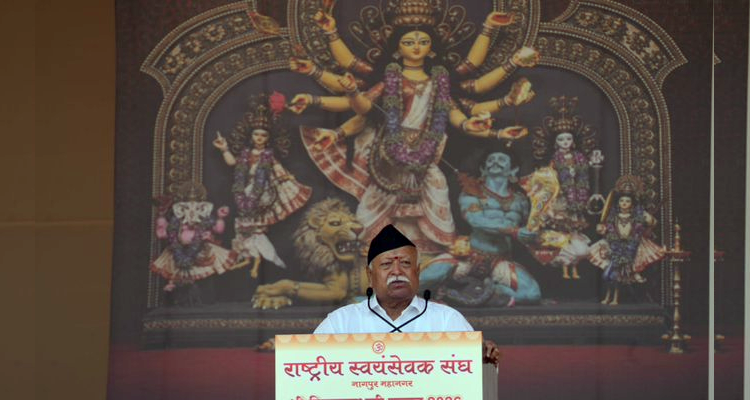
Nagpur: Rashtriya Swayamsevak Sangh (RSS) chief Dr Mohan Bhagwat on Tuesday warned that a wave of disruptive forces originating in the West was threatening cultural values, social order and political stability across the world, claiming that India had also become a prime target for attempts to weaken and destabilise governments.
Addressing the RSS’s annual Vijayadashami Utsav in Nagpur on October 20, Bhagwat said the emerging global trend sought to undermine values of decency, auspiciousness, culture and humanity. He added that even developed countries were struggling to deal with the impact of this wave.
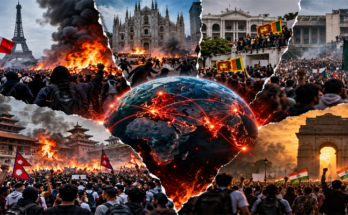
The RSS chief linked the alleged threat to political unrest and protests in several countries, including France, Albania, Bangladesh and Nepal. He argued that changes in government did not necessarily resolve the deeper problems facing these nations.
‘A Storm Has Come from the West’
Describing the emerging challenge, Bhagwat said a wave originating in the West was seeking to destroy traditional values and disrupt established social systems. He maintained that countries across the world were experiencing its consequences, leaving even developed nations struggling to respond.
Bhagwat suggested that forces pursuing vested interests were exploiting public dissatisfaction, social divisions and political movements to weaken countries from within. He cautioned that India, given its growing global stature, could also face attempts to undermine its stability.
”A storm has swept in from the West to destroy all that is decent, auspicious, and rooted in cultural and human values. Even the developed nations are afflicted by this storm. See what is happening in France, Albania, Bangladesh, and Nepal. All this has been done by them. They say that a regime change will change the situation, but that has never happened; not now, not ever…India too is their target”, RSS chief Mohan Bhagwat says forces trying to destabilise India
Source: ANI
— WION (@WIONews) October 20, 2026
However, his assertions about a coordinated international effort to destabilise governments were not independently substantiated.
India Is a Prime Target, Claims Bhagwat
Bhagwat alleged that forces seeking to preserve their influence were uncomfortable with India’s growing strength and international standing. He warned that the country could face attempts to weaken its institutions, deepen social divisions and undermine national cohesion.
He also cautioned against efforts to exploit differences within Indian society for political gains, arguing that such developments could threaten the country’s unity and long-term progress.
The RSS chief’s remarks reflected his broader concern that external interests could take advantage of domestic grievances and political disagreements to influence events within India.
Protests Must Focus on Solutions, Not Division
A key theme of Bhagwat’s address was the role of protests in a democracy. While acknowledging that public grievances and disagreements were inevitable, he cautioned against movements that fuel hostility, deepen divisions or undermine social harmony.
He argued that protests should focus on addressing genuine concerns rather than becoming instruments for political ambition or the pursuit of power.
Bhagwat also emphasised the importance of constitutional conduct and adherence to the law, urging citizens to exercise caution before supporting movements that could have wider consequences for the country.
His remarks came amid political debates and protests in India over electoral issues, governance and demands for political change.
Calls for National Unity and Cultural Confidence
Bhagwat stressed that India’s diversity should remain a source of strength rather than become a cause of division. He called for greater social cohesion, responsible citizenship and a renewed commitment to the country’s cultural foundations.
He maintained that lasting national progress required collective effort and constructive action at the individual, family and community levels.
The RSS chief also reiterated the importance of strengthening India’s social and cultural foundations as the country seeks a greater role on the global stage. He argued that the aspiration to emerge as a Vishwaguru would require sustained effort, discipline and a strong sense of national responsibility.
The Larger Message Behind Bhagwat’s Warning
Bhagwat’s address placed concerns over foreign influence within a broader discussion about political stability, cultural identity and India’s future.
By linking unrest in several countries to what he described as a Western-originating wave, he urged Indians to remain vigilant against forces that, in his assessment, could exploit domestic grievances and weaken social unity.
His central message was that India’s long-term stability would depend not only on political leadership and economic development but also on social cohesion, civic responsibility and the ability to resolve disagreements without allowing them to escalate into lasting divisions.
While Bhagwat framed the developments as part of a wider international challenge, his claims of a coordinated effort to destabilise governments remain allegations rather than independently established facts.