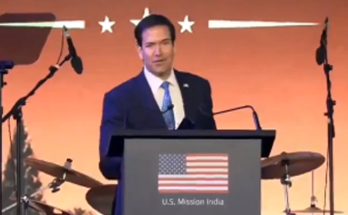

News Desk: US Secretary of State Marco Rubio has proposed bringing Venezuela’s vast heavy crude oil reserves and India’s advanced refining capabilities together, identifying Reliance Industries as a potential partner in expanding oil processing and exploring investment opportunities in Venezuela’s petroleum sector. During his visit to Mumbai, Rubio highlighted the opportunity for Reliance to refine more Venezuelan crude and potentially participate in its production, putting India’s refining expertise at the centre of a potential new energy partnership.
The proposal could create opportunities for all three countries: Venezuela could attract investment and expand its oil market, India could gain greater flexibility in sourcing crude, and the United States could advance its efforts to reshape energy cooperation with both countries. However, any expanded trade or investment would depend on commercial negotiations, regulatory approvals and the applicable US sanctions framework.
Venezuela’s Heavy Crude: An Enormous but Underutilised Resource
Venezuela holds one of the world’s largest proven crude oil reserves, much of which is concentrated in the Orinoco Belt. However, a significant share of its petroleum resources consists of heavy and extra-heavy crude, which is more difficult to extract, transport and refine than lighter varieties of oil.
Heavy crude generally requires specialised processing capabilities because of its high density and, in many cases, elevated sulphur content. Refining it efficiently can demand advanced equipment and considerable technical expertise.
Venezuela Has the Heavy Crude, India Has the Refining Expertise Rubio Sees an Opportunity https://t.co/2Q9guXBfl4
— The Researchers (@TheResearcherss) October 21, 2026
Despite its vast oil wealth, Venezuela’s petroleum industry has faced years of underinvestment, deteriorating infrastructure, operational challenges and the impact of international sanctions. These factors have limited the country’s ability to fully exploit its resources and restore production to higher levels.
The availability of experienced international partners and technically capable refiners could therefore play an important role in any effort to expand Venezuelan oil production and exports.
Why India Is Well Positioned to Refine Venezuelan Oil
India’s strength lies in its large refining capacity and its ability to process a diverse range of crude oil grades. The country has invested heavily in modern petroleum infrastructure, enabling refiners to produce valuable fuels from crude oils with different characteristics.
Reliance Industries, led by Mukesh Ambani, operates the Jamnagar refining complex in Gujarat, which has a combined processing capacity of approximately 1.4 million barrels per day. The facility is known for its scale, technological sophistication and ability to process a wide variety of crude oils, including heavy and high-sulphur grades.
These capabilities make Reliance a potential partner for expanding the processing of Venezuelan crude. By using sophisticated refining technology, companies can convert challenging crude grades into commercially valuable products such as petrol, diesel and aviation fuel.
For Venezuela, access to such refining expertise could help widen the market for its oil. For India, the opportunity could provide greater flexibility in sourcing crude and managing the needs of its large refining sector.
However, the discussions should not be interpreted as a confirmed agreement. Any expansion of purchases, investment or production would depend on commercial negotiations, regulatory requirements and the applicable sanctions framework.
What the Proposal Means for the United States
Washington’s interest in the potential partnership reflects the wider strategic importance of energy trade. Expanding the commercial development of Venezuelan oil could increase the supply available to international markets while creating opportunities for established energy companies.
India is an important player in this equation because of its extensive refining infrastructure and its role in the international petroleum products market. Indian refineries process crude oil into fuels that serve domestic demand as well as overseas markets.
Closer cooperation could also strengthen commercial ties between India and the United States, particularly at a time when energy security, trade relationships and geopolitical competition remain important policy considerations.
At the same time, Venezuela’s oil sector presents significant political and regulatory complications. US sanctions and restrictions have historically affected transactions involving Venezuelan oil, making the legal framework a critical consideration for companies assessing new investments or supply arrangements.
Consequently, the success of the proposal will depend not only on refining capacity and the availability of crude but also on the terms under which companies can operate.
Could Venezuelan Oil Help India Diversify Its Imports?
India imports the overwhelming majority of the crude oil it consumes, making the diversification of supplies an important element of its energy strategy. Access to additional producers can provide refiners with greater flexibility when prices fluctuate or geopolitical developments disrupt established supply routes.
Venezuelan crude has previously been processed by Indian refiners, including Reliance. Renewed opportunities could therefore build on existing technical experience rather than require an entirely new refining relationship.
Nevertheless, increasing imports would depend on several factors, including the price of Venezuelan crude, transportation costs, production reliability, payment arrangements and compliance with international restrictions.
Venezuelan oil would also need to compete commercially with supplies from other producers. Its availability alone would not guarantee that Indian refiners would increase purchases substantially.
For India, the potential attraction lies in having another source of crude that can be processed efficiently by its advanced refineries. Such flexibility could support energy security without necessarily replacing existing suppliers.
The Challenges Ahead for Venezuela
Venezuela’s enormous reserves do not automatically translate into high production. Restoring and expanding the country’s petroleum industry would require sustained investment in oil fields, pipelines, processing facilities and export infrastructure.
The production of extra-heavy crude can be particularly challenging because it may require specialised extraction techniques and diluents to facilitate transportation. Ageing facilities and maintenance requirements add further complexity.
Any foreign investor would also need to evaluate the condition of existing assets, the stability of contractual arrangements and the long-term commercial outlook.
For Reliance or other potential partners, the decision would ultimately depend on whether the expected returns justify the operational, financial and geopolitical risks.
These challenges mean that any new arrangement would take time to develop and should not be viewed as an immediate transformation of Venezuela’s oil industry.
A Strategic Opportunity at the Intersection of Oil and Refining
Rubio’s proposal brings together three distinct strengths and interests: Venezuela’s vast petroleum resources, India’s sophisticated refining capabilities and the United States’ interest in expanding commercial opportunities in the Venezuelan oil sector.
If discussions lead to concrete agreements, the cooperation could create opportunities across crude production, refining and international fuel trade. It could also demonstrate how countries with different advantages can work together to unlock the value of energy resources.
For India, the prospect reinforces the importance of its refining industry in global energy markets. For Venezuela, it could offer a pathway to attract investment and expand access to international buyers. For the United States, it presents a potential avenue for closer energy and commercial engagement with India.
Much will depend on the commercial terms, the regulatory environment and Venezuela’s ability to increase production reliably.
The underlying proposition, however, is clear: Venezuela has the heavy crude, India has the refining expertise, and Washington sees an opportunity to bring the two together. Whether this becomes a major energy partnership will depend on how effectively the three countries can turn that opportunity into a workable commercial arrangement.