News Desk: US President Donald Trump has warned that he would use his presidential veto power against legislation proposed by Democrats if they take control of Congress, signalling a potentially bitter political confrontation in Washington. His remarks have gained fresh significance after Democrats secured major victories in the November 3 midterm elections, winning control of both the House of Representatives and the Senate.
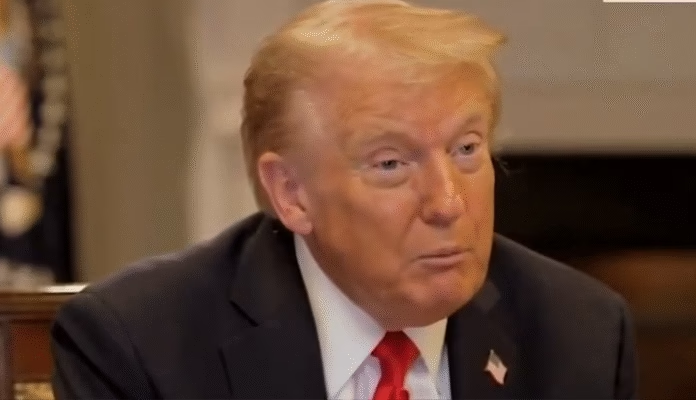
Speaking to Miranda Devine during an interview for the New York Post’s podcast Pod Force One, Trump made his position clear when asked how he would work with a Democrat-controlled Congress.
“If we didn’t win, I veto everything. I’ll be vetoing, vetoing,” Trump said, adding that Democrats would eventually have to negotiate with him. He also suggested that after repeated vetoes, opposition lawmakers would approach the White House to reach agreements.
The President indicated that he expected to become “Mr. Veto” if Republicans lost their congressional majorities, although he expressed hope that the party would retain control.
Democrats deliver a major setback to Trump
The November 3 midterm results have dramatically changed the political equation in Washington. Democrats have won control of both chambers of Congress, ending Republican dominance of the legislature and delivering a significant setback to Trump’s administration.
The result is particularly important because Trump had campaigned extensively for Republican candidates, holding rallies across several states to encourage voters to preserve the party’s congressional majority.
However, voter concerns over rising living costs, inflation, government corruption and the administration’s handling of the Iran war contributed to a strong Democratic performance.
The victory gives Democrats greater legislative influence and the power to intensify scrutiny of the Trump administration through congressional committees and investigations.
Presidential veto could become a major weapon
Trump’s warning highlights the importance of presidential veto power in the American political system.
Under the US Constitution, the President can reject legislation passed by Congress and return it with objections. However, Congress can override a presidential veto if a two-thirds majority in both the House and Senate supports the bill.
With Democrats controlling both chambers, the possibility of repeated clashes between the White House and Congress has increased.
Trump believes that rejecting Democratic-sponsored bills could force opposition lawmakers to negotiate compromises rather than pursue legislation independently. However, such an approach could also create prolonged legislative deadlock.
“I guess I’ll become Mr. Veto.”
President Trump lays out his strategy for dealing with a potential Democratic-controlled Congress in an exclusive interview with Miranda Devine.
Trump says he would veto legislation before eventually negotiating compromises, while expressing hope Republicans maintain control after Tuesday’s midterms.
— Fox News (@FoxNews) November 1, 2026
Congressional investigations may intensify
Democratic control of Congress will not be limited to legislative battles. The party is also expected to use its majority to increase oversight of the Trump administration.
Congressional committees could launch investigations into government policies, executive decisions, federal agencies and the business interests of the President and his family.
The change in congressional leadership could also slow the confirmation of Trump’s nominees, particularly judicial appointments and senior government positions requiring Senate approval.
For the White House, this means that the final two years of Trump’s presidency could become considerably more challenging, with greater opposition to his domestic and administrative agenda.
A possible period of political deadlock
The confrontation could affect several important policy areas, including immigration, healthcare, taxation, trade, government spending and foreign affairs.
Although Trump retains considerable executive authority, he cannot independently enact legislation that requires congressional approval. Similarly, Democrats will find it difficult to turn their legislative priorities into law if the President refuses to sign their proposals and they cannot secure the votes needed to override his vetoes.
Both sides will also have to cooperate on essential matters such as government funding and other must-pass legislation.
Trump’s strategy appears to be based on the expectation that repeated vetoes will eventually bring Democrats to the negotiating table. Whether that approach succeeds remains uncertain.
With Democrats controlling both chambers and Trump determined to defend his political agenda, Washington is heading towards a potentially turbulent period of divided government.
The coming months will test Trump’s ability to govern without congressional support and determine whether political negotiations can prevail over confrontation in an increasingly polarised American political landscape.