News Desk: Iran has declined to participate in a proposed second round of talks with the United States, casting uncertainty over ongoing diplomatic efforts to ease tensions between the two countries.
According to Iranian state media, including Islamic Republic News Agency, reports suggesting Tehran’s participation in fresh negotiations—reportedly planned in Islamabad—are “incorrect.” Officials clarified that Iran currently has no plans to engage in further dialogue with Washington.
Key Reasons Behind Iran’s Refusal
Iranian authorities have cited a range of concerns over the US approach, indicating that conditions are not conducive for meaningful negotiations. Among the key issues raised:
- Alleged “unrealistic demands” from the US side
- Lack of consistency in Washington’s negotiating stance
- Continued military and economic pressure, including naval restrictions
- Erosion of trust following recent developments
Tehran has maintained that unless these issues are addressed, further talks would not yield productive outcomes.
#BREAKING | Islamabad talks 2.0
Trump: US delegation to travel to Islamabad
Iran state media says Tehran not planning to attend talks@ShivanChanana brings you the latest pic.twitter.com/OYTKzOP48k
— WION (@WIONews) April 20, 2026
Backdrop of Rising Tensions
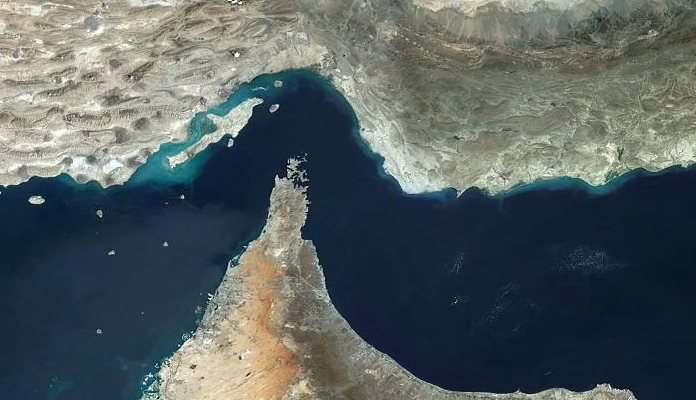
The decision comes amid heightened strain in relations between Iran and the United States. Recent developments—including strategic confrontations in key maritime zones and disagreements over ceasefire conditions—have complicated diplomatic efforts.
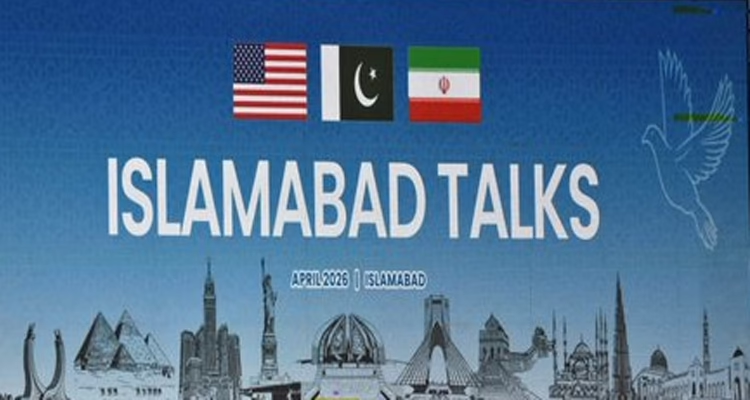
The reported second round of talks was expected to build on earlier discussions hosted in Islamabad earlier this month. However, those initial engagements failed to produce any significant breakthrough.
BREAKING: Iran has no plans of more talks with the US, says Foreign Ministry spokesperson
🔴 LIVE updates: https://t.co/qKNJfTTX7k pic.twitter.com/W0dozI6c6W
— Al Jazeera Breaking News (@AJENews) April 20, 2026
Uncertain Future for Diplomacy
With Iran stepping back, the prospects for immediate negotiations appear bleak. While the US has not officially confirmed cancellation of the proposed talks, the absence of Iran’s participation effectively stalls the process.
Observers warn that the breakdown in dialogue could further destabilise the region, particularly at a time when fragile ceasefire arrangements remain under pressure.
For now, both sides appear entrenched in their positions, leaving diplomatic channels strained and the path to de-escalation unclear.