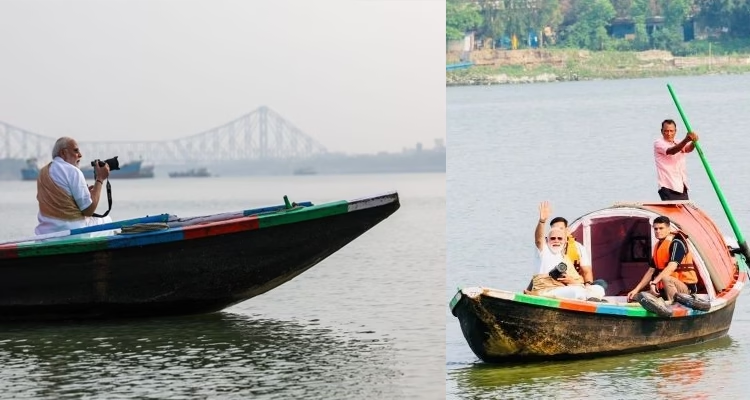
In the thick of West Bengal’s high-stakes election season, Prime Minister Narendra Modi struck a markedly softer note on Friday, choosing the calm banks of the Hooghly River over the usual roar of campaign rallies.
Coming just a day after an impressive voter turnout in the first phase of polling in West Bengal, the visit appeared carefully timed—and carefully crafted. Modi was seen observing the morning rhythms along the river, interacting with locals, and stepping away from hard-hitting political rhetoric. Party insiders described it as a deliberate attempt to connect emotionally with Bengali voters.
গতকাল সন্ধ্যায়, হাওড়া থেকে কলকাতা পর্যন্ত দীর্ঘ রোড-শো’র সময় হাওড়া ব্রিজের ওপর ছিলাম। আর আজ সকালে, হুগলি নদী থেকে এই ব্রিজকে দেখলাম! pic.twitter.com/UQgblRsetj
— Narendra Modi (@narendramodi) April 24, 2026
In a social media message, the Prime Minister invoked the cultural and spiritual resonance of the Ganga in Bengal’s identity, framing his stop as more civilisational than political.
From Riverbanks to Roadside: A Campaign of Contrasts
The Hooghly visit follows a string of high-energy rallies and roadshows led by the Bharatiya Janata Party. Yet, it’s the quieter, unscripted moments that are drawing just as much attention.
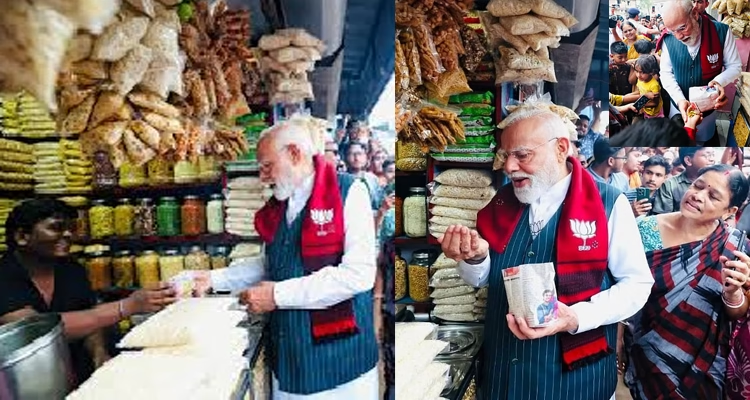
Jhalmuri break in Jhargram! pic.twitter.com/LJNjEojAW4
— Narendra Modi (@narendramodi) April 19, 2026
Days earlier in Jhargram, Modi briefly paused his convoy to stop at a roadside stall, where he bought and ate jhalmuri—a beloved Bengali snack. The gesture, complete with a direct interaction with the vendor and insistence on payment, quickly went viral. While supporters hailed it as a grounded, relatable moment, rivals from the All India Trinamool Congress dismissed it as political theatre.
‘Fear Is Fading’: A Sharper Pitch at Rallies
Despite the softer optics, Modi’s campaign messaging remains pointed. Addressing a rally in Mathurapur, he linked the high voter turnout—especially among women and youth—to what he described as a shift in public sentiment.
“The turnout shows fear is fading and trust is rising,” he said, projecting the election as a decisive turning point.
Dual Strategy in Play
The contrast between quiet symbolism and aggressive rhetoric reflects a broader BJP strategy—pairing cultural outreach with sharp political attacks. While rallies continue to target the ruling TMC, moments like the Hooghly visit and the jhalmuri stop aim to build a deeper emotional connect.
With polling underway and momentum narratives taking shape, Bengal’s electoral battle is unfolding on multiple fronts—through speeches, symbolism, and carefully staged human moments that seek to resonate beyond politics.